
Best LED Emergency Battery Backup Solutions for Commercial Buildings
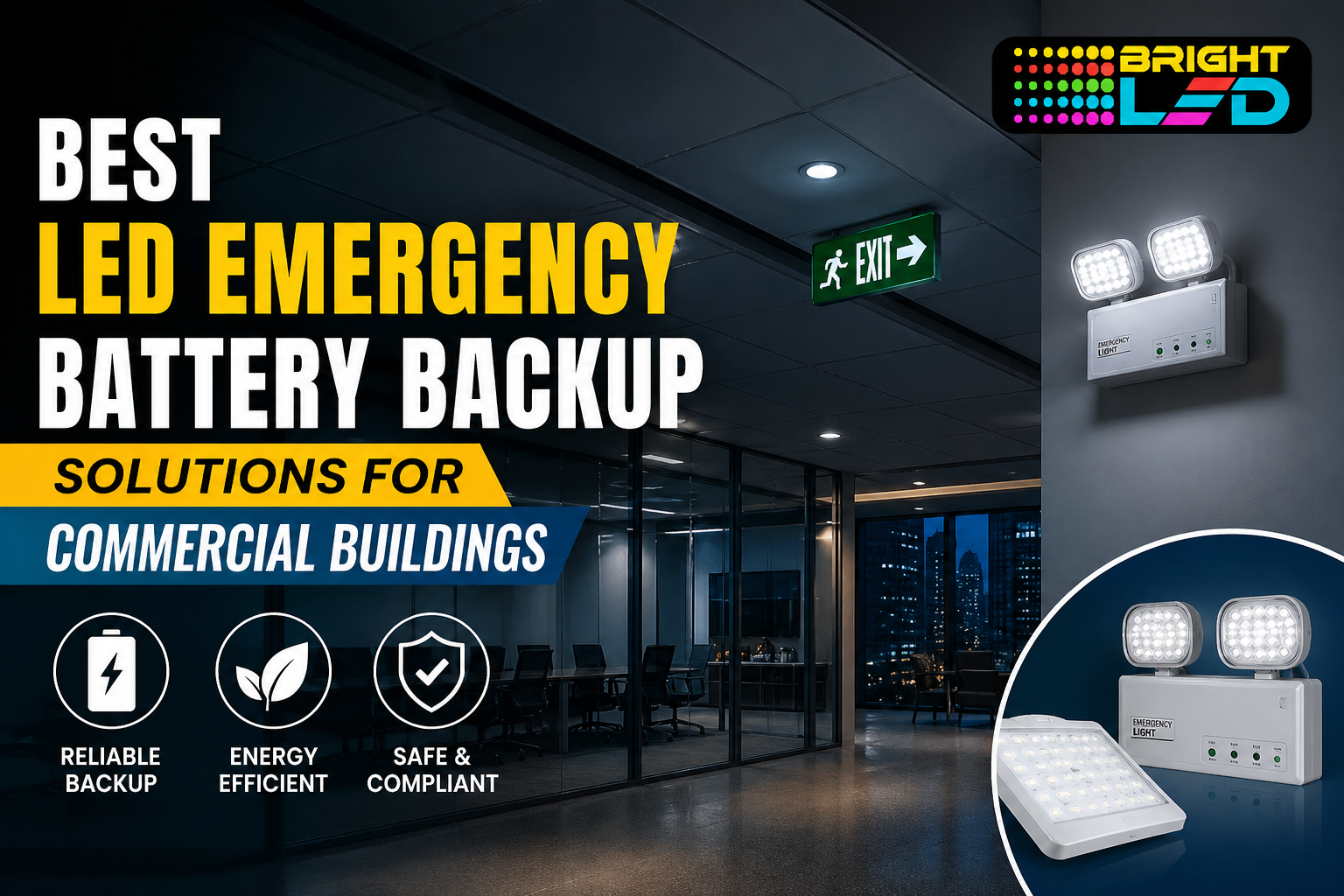
Best LED Emergency Battery Backup Solutions for Commercial Buildings
The moment blackouts strike a commercial establishment, the time it takes for light to be completely lost is just in the milliseconds. It is in these moments that fear strikes as a major problem that puts people at risk for injury. Today in 2026, Commercial LED emergency battery backup lights like “UFO Emergency Driver 40W Bilda” are not considered anymore as just code-required equipment, but rather as complex safety systems created specifically to provide security against sudden blackouts.
No matter whether you run an office building in the Energy Corridor in Houston, or a large distribution center near the Port of Houston, having a solid understanding of emergency lighting is important both for legal protection and safety purposes. This guide highlights the top LED emergency lighting solutions currently being offered in Texas and explains what features to look for in emergency drivers and certifications.
The Evolving Role of Emergency Lighting in 2026
In the past, emergency lighting had been nothing short of a poor attempt, using old, bulky "bug-eye" lights that would not turn on even though they had been lying idle for years. Now, in 2026, the technology has moved on to being more intelligent. The current systems are fitted with powerful, high-density lithium batteries and sensors that are capable of performing self-diagnostic tests, making sure that the system meets the "90-minute mandate" by the NFPA.
The objective of having an emergency lighting system is quite simple – to help create an evacuation route. However, this process has become much easier today. Through the use of LED technology, companies can now provide much brighter lights while consuming minimal battery resources, enabling more stylish lighting that does not mar the elegant appearance of commercial properties. Moreover, from a practical perspective, it makes much more sense to have a reliable and localized backup power system rather than wait a few seconds for a central generator to start working.
Powering the Perimeter: Parking Lot Lighting with Backup
Security doesn't end when people leave through the main doors. For some commercial buildings, the "path of egress" can extend far out into the parking lot. Area lighting systems fitted with emergency battery backups help ensure that moving from an illuminated indoor space to complete darkness does not lead to accidents, injuries, and security threats.
In 2026, the trend is towards area lighting units designed to work in emergency mode. The lights work normally in good conditions, but when there is a power outage, they automatically turn their output into an emergency setting, limiting the power drawn to less than 150W to preserve the batteries until the critical 90 minutes. The path to the car and the designated assembly point becomes safe again. For Houston businesses, choosing IP65-rated units with battery heaters is essential to ensure the backup performs even during a rare Texas freeze or a high-humidity storm.
The Role of High-Contrast Safety
Exterior emergency lighting isn't just about lumens; it’s about contrast. During a power failure, the camera system works best in a high-contrast area. If the perimeter remains dark, you risk losing the ability to monitor the movements of potential threats. A poorly illuminated perimeter creates opportunities; the well-lit one provides protection.
Visual Clarity in High-Stakes Zones: Warehouse LED Lighting
In an industrial setting, a power outage is extremely dangerous due to the presence of machinery and tall storage racks. Warehouse LED lighting with integrated battery backups is the modern standard for Houston’s logistics hubs.
Modern high-bay lights provide an "integrated emergency driver" option that avoids using external, wall-mounted Outdoor Led Emergency Units that do not always reach the ground level from heights of 40 feet. By building the backup directly into the high bay, the light is delivered from the same optimal position as the general illumination. This type of battery is usually paired with LiFePO₄ (Lithium Iron Phosphate) batteries that are used in 2026 due to their capability to withstand the increased ambient temperature levels of Texas facilities without any loss of capacity.
Vertical Egress and Aisle Safety
Modern warehouse lighting design focuses on "vertical footcandles." The operator needs to observe the top of the rack and the floor at the same time in case of emergency situations to prevent being hit by falling objects or other dangers. Integrated backup lighting systems distribute the light evenly on the vertical plane, ensuring safe movement through narrow passages during evacuation procedures.
Seamless Professionalism: Commercial Office Lighting
For corporate environments, the priority is often "invisibility." No one wants an architectural office suite marred by bulky, industrial-looking emergency boxes. Modern commercial office lighting solves this through the use of ultra-slim emergency drivers tucked inside LED panels and troffers.
They are barely noticeable from standard light fixtures. In case of power interruption, the battery inside powers some LEDs, creating even illumination without flickering. They are frequently coupled with "Self-Testing" modules that automatically carry out mandatory tests every month (30 seconds) and once a year (90 minutes). The results are saved in the form of a tiny LED light indicator. This level of automation is a major selling point for Houston property managers who need to maintain compliance across multiple floors without a massive maintenance staff.
The Strategic Choice: LED Retrofit Solutions
If your building is fitted with excellent housings but requires new emergency equipment, LED Retrofit Solutions provides a viable option for complying with the law at a reasonable price. In 2026, "emergency backup kits" became a trend among facility managers interested in modernizing their safety infrastructure without a massive renovation.
A standard kit consists of a driver, a backup battery, and a specially-designed wall switch enabling normal operation of the fixture and constant charging of the backup unit simultaneously. This solution works great for retrofitting fluorescent lights into LEDs. By eliminating the need for the original ballast and replacing it with an emergency-rated driver, you eliminate one possible fault in the circuit. "Universal" kits can sometimes be adapted to accommodate different fixtures, including corridor strips and recessed cans.
The Gold Standard: UL 924 and the 90-Minute Rule
When selecting emergency hardware, the technical certifications are non-negotiable. In the United States, and specifically under Houston building codes, two standards reign supreme:
- UL 924 (Standard for Emergency Lighting and Power Equipment): This is what the law requires. The fixture or a driver must have a UL 924 certificate in order to be considered an emergency lighting fixture. It proves that the product automatically switches to battery power after 10 seconds of a blackout and maintains the required level of brightness for 90 minutes.
- DLC (DesignLights Consortium): While DLC usually focuses on efficiency, many utility rebates in 2026 require DLC qualification for "Safety Upgrade" incentives. This allows Houston businesses to recoup costs through programs like CenterPoint’s commercial incentives.
Types of Emergency Backup Configurations
In 2026, there are three primary ways to implement LED battery backups:
● Integrated Fixtures: The battery and driver are built into the light at the factory. This is the most reliable and aesthetically pleasing option for new constructions.
● Field-Installable Drivers: These are added to existing fixtures by an electrician. They are highly versatile and ideal for multi-tenant office buildings undergoing a refresh.
● Inverter Systems (Mini-Inverters): Instead of a battery in every light, a small "mini-inverter" powers a circuit of standard lights. This is used in architectural spaces where integrated drivers won't fit the design.
The Financial Logic: ROI of "Self-Testing" Systems
The highest hidden cost of emergency lighting isn't electricity; it’s labor. National fire codes require every emergency light to be tested monthly and annually. In a 100,000-square-foot facility, this can take a maintenance team days to complete.
In 2026, investing in Self-Diagnostic (SD) LED fixtures offers a massive ROI. These units perform tests automatically. If a battery is weak or an LED board fails, a status light changes color (usually green to red). In other words, rather than running tests on each light, your team simply walks around and checks if there are any red lights. Thus, you can save on labor costs from between 60% to 80%. In addition, the savings from labor allow for covering all system expenses.
Thermal Management and Sustainability
Houston’s heat is a known killer of batteries. Traditional lead-acid batteries fail quickly in non-climate-controlled spaces like Warehouse Lighting Houston. Modern LED backups use LiFePO4 chemistry. These batteries are resilient to the "Texas Heat Effect," operating efficiently in ambient temperatures up to 140°F.
Transitioning to LED emergency solutions also contributes to your company’s ESG goals:
● Reduced Electronic Waste: LiFePO4 batteries last 7-10 years, halving the amount of battery waste your facility produces over a decade.
● Mercury Elimination: Replacing old fluorescent emergency ballasts removes mercury-filled lamps from your waste stream, making your building eco-friendly.
Legal Liability and Insurance Considerations
From a B2B perspective, emergency lighting is an insurance necessity. In the event of a workplace injury during a power failure, investigators will check maintenance logs. By installing modern, self-diagnostic LED systems, you provide a clear, automated paper trail of compliance. Many commercial insurance providers in Texas now offer premium discounts for buildings that modernize their life-safety systems with UL 924-compliant LED hardware.
FAQs
How long do LED emergency batteries typically last?
Typically, LiFePO₄ batteries have a 7-10 year life expectancy. If operating in a high-temperature climate zone such as Houston, you should inspect them every 5 years.
Does "Emergency Mode" mean the light is just as bright?
Usually, no. In order to save battery power, most emergency drivers run on only 10% to 20% of maximum wattage. Legally, this is enough to comply with the 1-foot candle average for egress areas.
Can I use a standard LED bulb in an emergency fixture?
Only if the fixture has a dedicated emergency battery backup and driver. A standard LED bulb has no power storage; it will go out during a grid failure without a UL 924 listed backup system.
Conclusion
Protecting your business in Houston begins with the creation of a protected workplace atmosphere. With Bright LED TX, you get the technical assistance required to create an emergency lighting grid. We can ensure compliance, energy efficiency, and affordability, whatever your requirements—from industrial lighting for warehouses to office panels.
Don't wait for the next Houston blackout. Contact Bright LED TX today for a comprehensive emergency lighting audit.


-
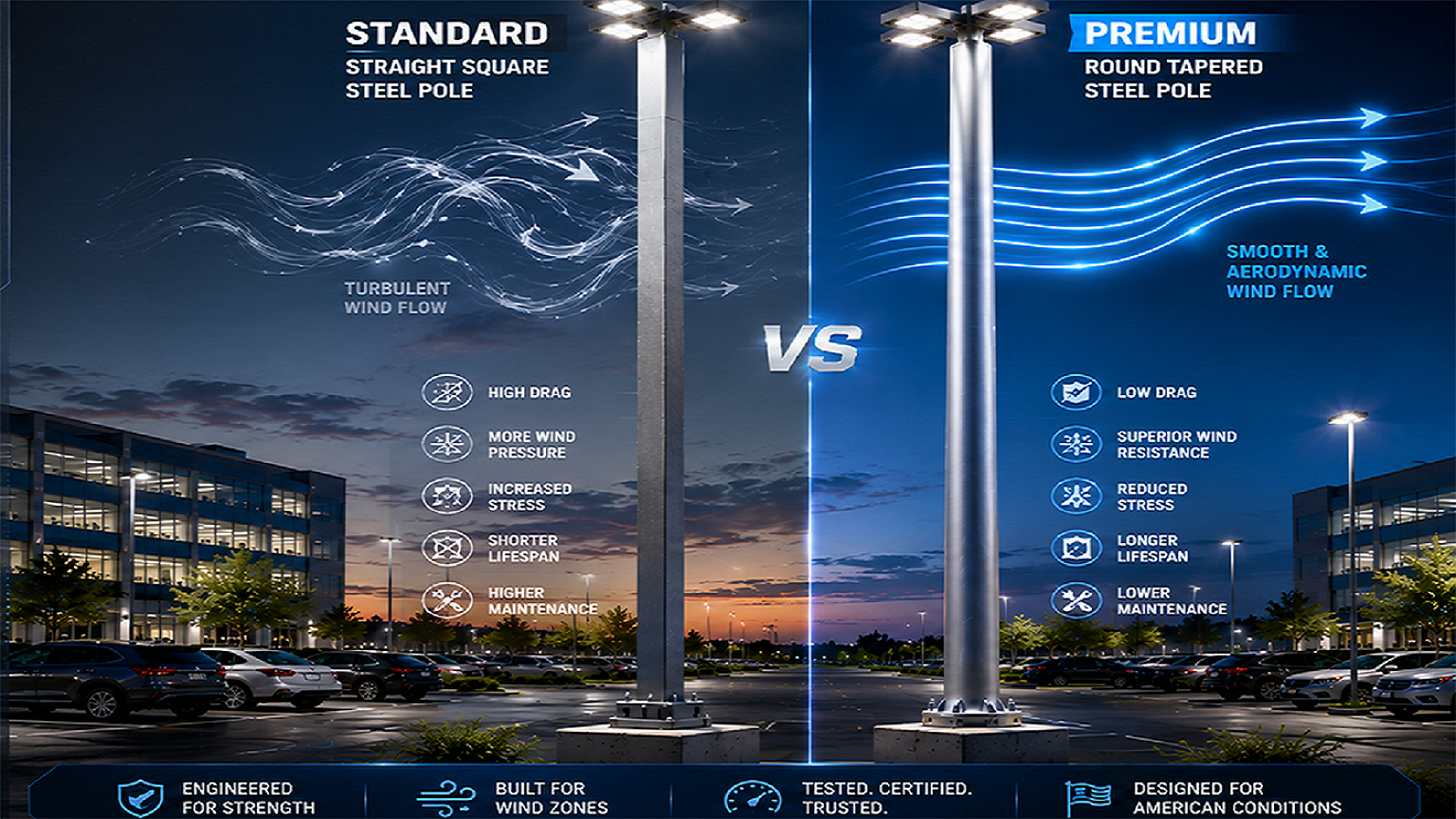
Straight vs. Tapered Light Poles: Which Offers Better Structural Integrity?
 June 9, 2026
 -
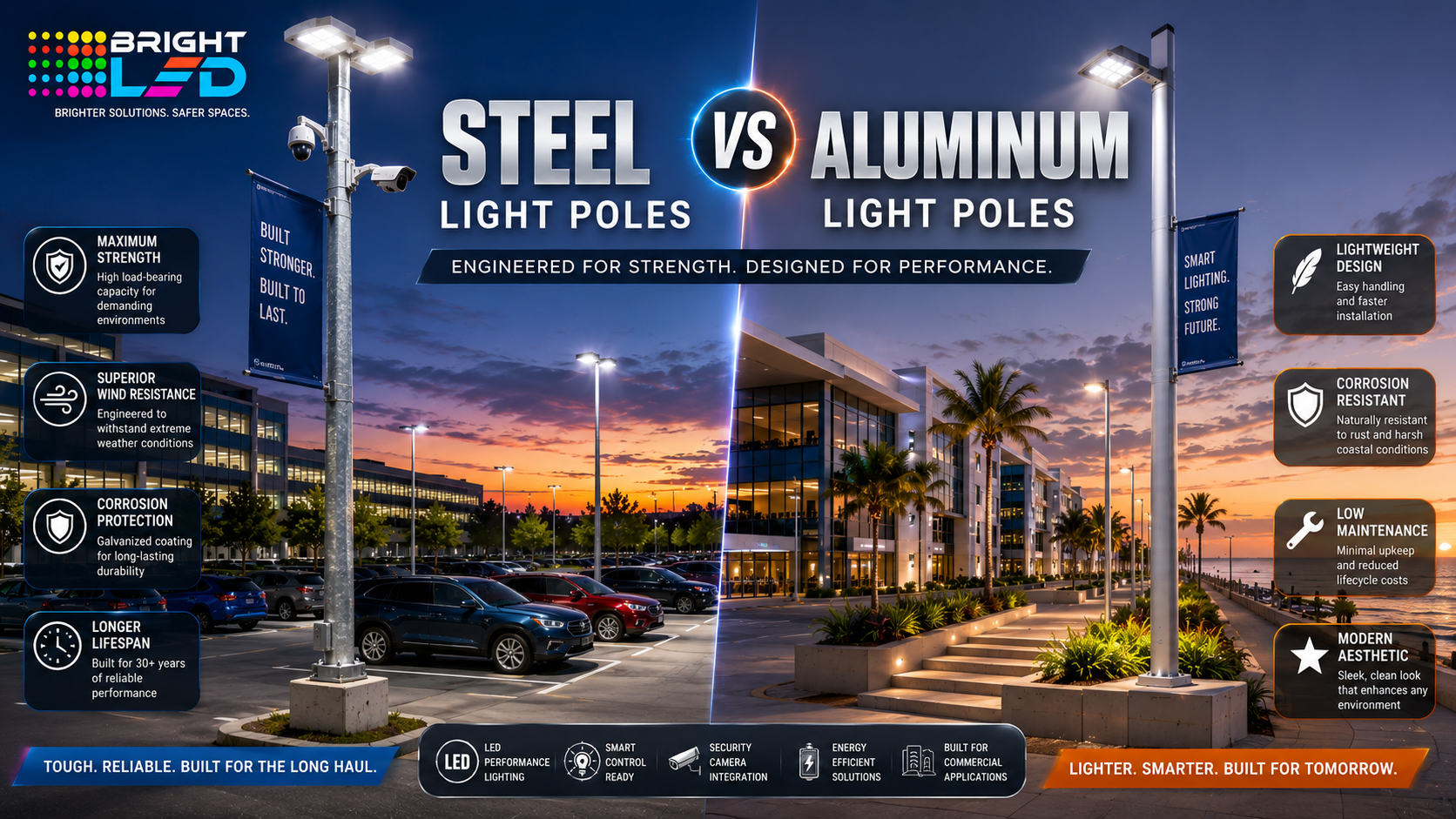
How to Choose the Right Commercial Light Pole: Steel vs. Aluminum
 June 5, 2026
 -
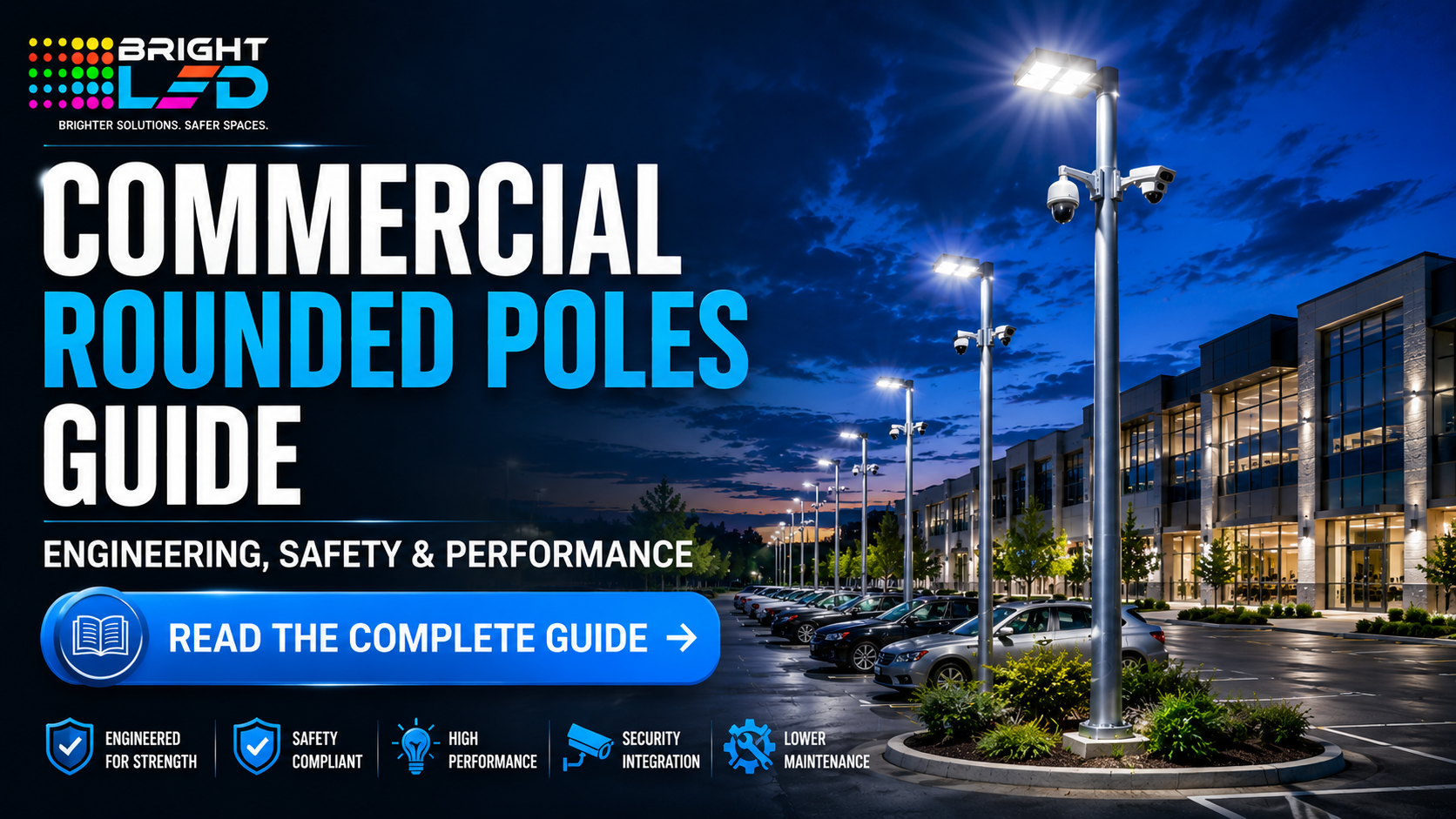
Best Practices for Specifying Round Steel Poles for Commercial Parking Lots
 June 2, 2026
 -
LED Emergency Exit Signs: Installation Guide for Commercial Buildings (2026)
 May 26, 2026
 -
LED Emergency Battery Backup Systems for Commercial Lighting & Businesses
 May 23, 2026