
LED Retrofit vs New Installation: What’s Best for Houston Properties?
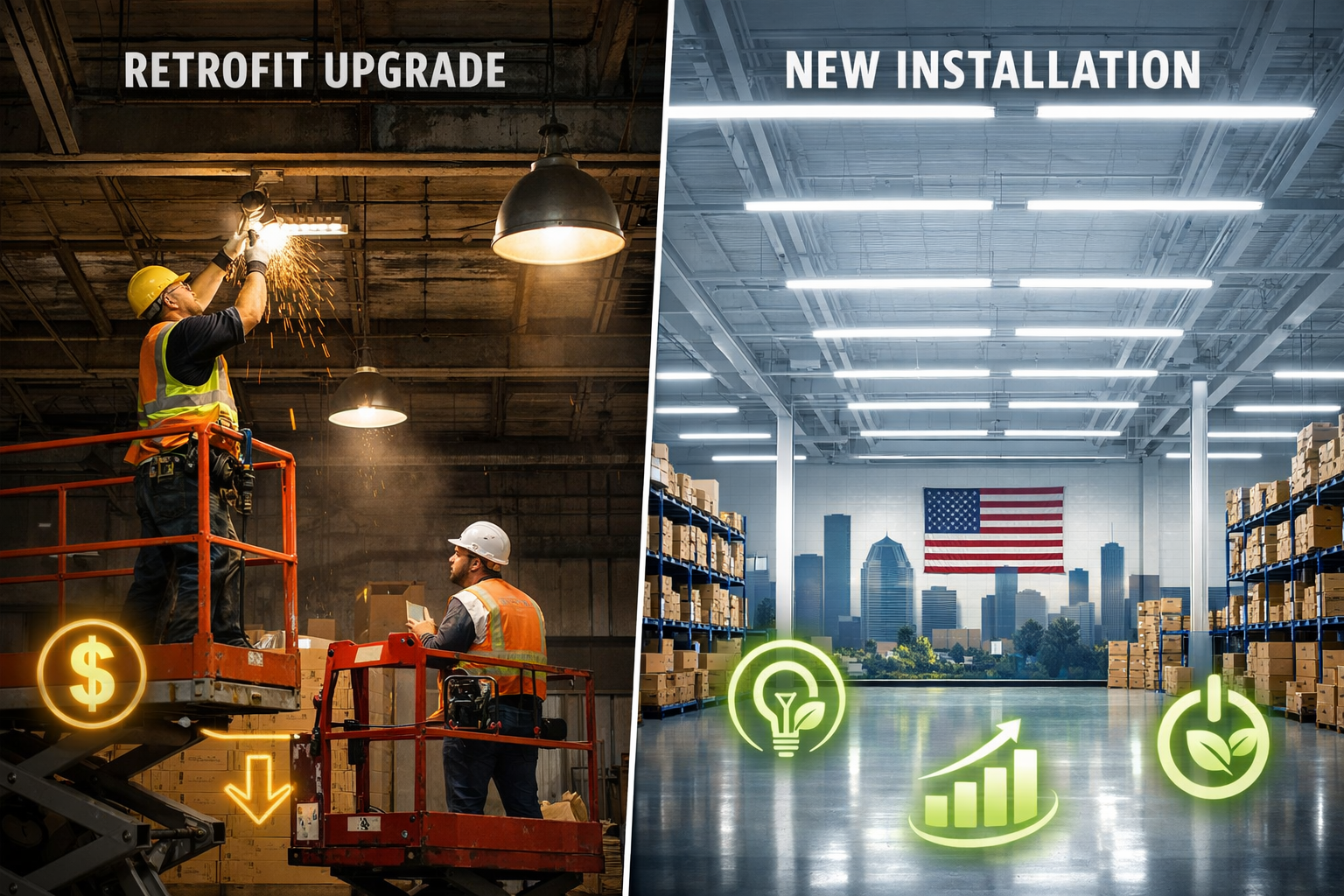
LED Retrofit vs New Installation: What’s Best for Houston Properties?
In the rapidly expanding industrial landscape of Houston, facility managers and property owners are constantly looking for ways to trim operational waste. Between the soaring summer temperatures and the non-stop logistics cycle, energy consumption is often the largest "fixed" expense on the balance sheet.
The question for most local businesses isn't if they should switch to LED, but how. When choosing between an LED Retrofit and a New Installation, the right answer depends on your existing infrastructure, your long-term capital goals, and the specific needs of your Houston property.
The Decision Matrix: Retrofit Versatility vs. Total Replacement
Deciding between retrofitting and a new installation is essentially a choice between immediate capital preservation and maximum long-term efficiency.
An LED Retrofit allows you to keep your existing fixture housings while replacing the internal components (the lamps and drivers). This is often the go-to move for Houston properties with high-quality, heavy-duty housings that are still in good structural shape. Conversely, a New Installation involves removing the entire old fixture and mounting a brand-new, purpose-built LED unit. While the upfront cost is higher, it offers the peak of optical performance and system longevity.
Precision and Power: Warehouse LED Lighting
For the massive distribution centers lining the I-10 corridor, the choice between retrofit and new installation often comes down to ceiling height and aisle layout. Warehouse LED Lighting must be powerful enough to reach the floor through narrow racking. If your current high-bays are structurally sound, a "corn bulb" or linear retrofit kit can slash your wattage by 60% almost overnight. However, if you are looking to integrate advanced motion sensors or "daylight harvesting" to combat the Houston sun, a new integrated UFO High Bay installation provides the smart-control compatibility that older housings often lack.
Request Free Lighting Consultation
The Aesthetic Standard: Commercial Office Lighting
In professional environments from Downtown high-rises to Energy Corridor office parks, the visual quality of light is just as important as the energy savings. Commercial Office Lighting upgrades are usually best served by new LED Panel or Troffer installations. While you can retrofit fluorescent troffers with LED tubes, a new integrated panel provides a perfectly smooth, edge-to-edge glow that eliminates the "striped" look of tubes. This upgrade not only reduces eye strain for your administrative team but also modernizes the architectural feel of the space, increasing the property’s value for potential tenants.
Perimeter Protection: Parking Lot Lighting
Houston’s humidity and coastal storms are brutal on exterior hardware. When evaluating Parking Lot Lighting, the physical integrity of the fixture is the deciding factor. If your existing poles and heads are showing signs of rust or seal failure, a new installation is mandatory to ensure the internal electronics stay dry. New LED area lights offer superior light "throw," meaning you might actually be able to achieve better visibility with fewer total fixtures compared to your old HID system. However, if your housings are IP-rated and in mint condition, a high-output LED retrofit kit can be a fast, effective way to boost security.
Tailored Transitions: LED Retrofit Solutions
For properties where budget is the primary constraint, LED Retrofit Solutions offer the fastest path to a positive ROI. By bypassing the old, power-hungry ballasts and wiring directly to the line voltage, you eliminate the most common point of failure in commercial lighting. These solutions are particularly popular in Houston’s retail strips and small-scale industrial shops where a weekend project can result in a 50%–70% drop in next month’s utility bill and are widely adopted in Industrial LED lighting & warehouse solutions to improve operational efficiency. It is the ultimate "low-friction" upgrade that keeps your business running while the savings start to stack up.
The Gold Standard: Why UL and DLC Certifications Matter
Regardless of whether you choose to retrofit or replace, the hardware you select must meet the rigorous standards of the USA market.
UL/ETL Listed
This is your safety guarantee. In the event of an electrical issue, insurance providers look for the UL mark to confirm the hardware met strict fire and safety codes.
DLC Qualified
The DesignLights Consortium (DLC) list is the gatekeeper for utility rebates. In Houston, many energy providers offer substantial cash-back incentives for upgrading to LED, but they almost exclusively require the products to be DLC Qualified. Choosing certified hardware can often cover 20% to 50% of your total project cost through local rebates.
Financial Comparison: Breaking Down the Numbers
To understand the true cost of each path, we must look beyond the sticker price of the hardware.
|
Feature |
LED Retrofit |
New LED Installation |
|
Upfront Cost |
Low to Moderate |
High |
|
Labor Requirement |
Fast (15-20 mins/unit) |
More Intensive |
|
System Lifespan |
30,000 – 50,000 Hours |
50,000 – 100,000 Hours |
|
Rebate Eligibility |
Moderate |
Maximum |
|
Optical Control |
Limited to the existing lens |
Precision-engineered optics |
The "Houston Heat" Variable
In Southeast Texas, your lighting system and your HVAC system are constantly in a tug-of-war. Traditional metal halide and fluorescent lights act as heaters, pushing internal temperatures up. LEDs run significantly cooler. By upgrading, you aren't just saving on the light bill; you are reducing the load on your building’s cooling system. A new integrated installation typically offers the best heat dissipation, as the entire fixture body acts as a heat sink, whereas a retrofit bulb relies on its own internal cooling.
FAQs
Which option has the fastest Return on Investment (ROI)?
Generally, an LED retrofit has a faster ROI because the initial material and labor costs are much lower. Most Houston businesses see a full payback on a retrofit project in 12 to 18 months.
Can I mix retrofits and new installations in the same building?
Yes. Many facility managers choose new installations for high-traffic office areas to improve aesthetics, while using retrofits for back-of-house storage and utility rooms to save on capital.
Will I still get utility rebates for retrofitting?
Yes, as long as the retrofit kits or lamps are DLC-listed. However, new fixtures often qualify for higher "tiered" rebates because they achieve greater total energy reduction.
How do I know if my old fixtures are "retrofit-ready"?
Check the sockets and the housing. If the sockets are brittle or the metal housing is corroded, it’s safer to go with a new installation. If the housing is solid, a retrofit is a great option.
What is "Ballast Bypassing" in a retrofit?
It is a process where your electrician wires the light socket directly to the building’s power, removing the old ballast. This is highly recommended because it removes a component that eventually burns out and wastes energy.
Your Partner in Houston Commercial Excellence
At Bright LED TX, we don't believe in one-size-fits-all. Our goal is to help you identify the specific solution that balances your budget with your performance needs. Whether you need a massive Warehouse LED Lighting overhaul or specialized Commercial Office Lighting to boost productivity, we have the local inventory and expertise to get the job done right.
Ready to stop overpaying for your utilities? Contact us today for a comprehensive lighting audit of your Houston property. Call Now +1 281-601-1133


-
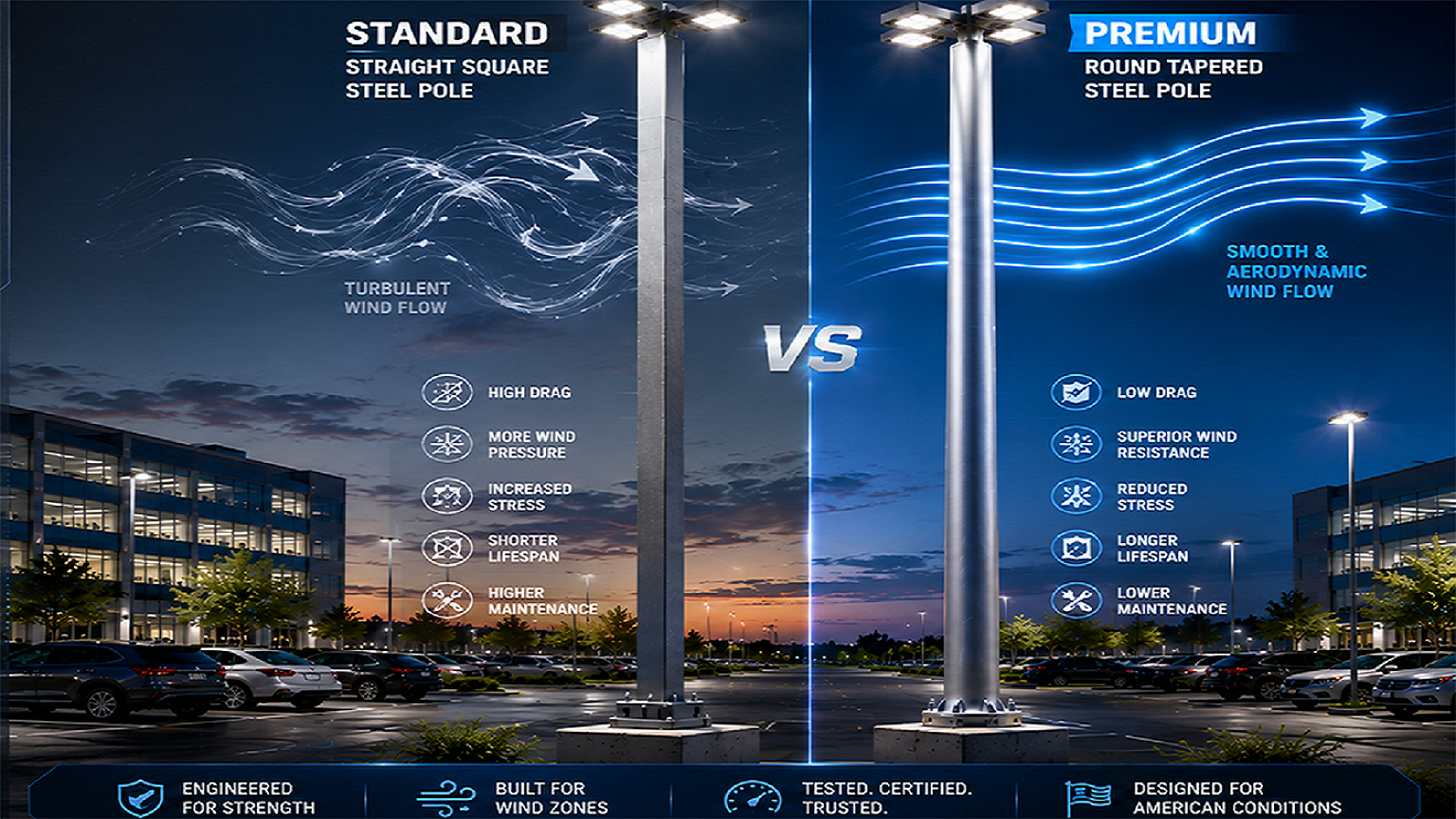
Straight vs. Tapered Light Poles: Which Offers Better Structural Integrity?
 June 9, 2026
 -
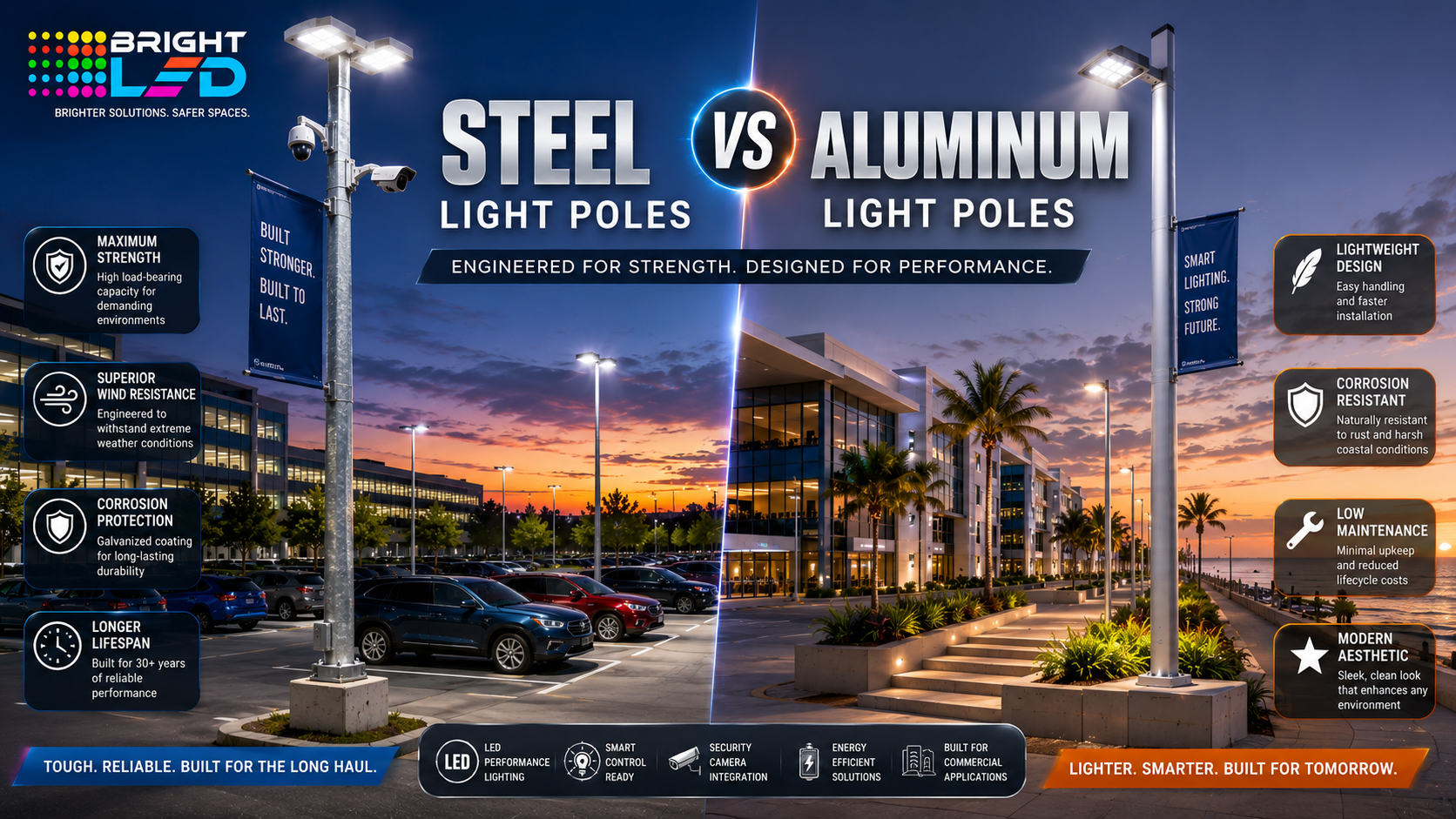
How to Choose the Right Commercial Light Pole: Steel vs. Aluminum
 June 5, 2026
 -
Best Practices for Specifying Round Steel Poles for Commercial Parking Lots
 June 2, 2026
 -
LED Emergency Exit Signs: Installation Guide for Commercial Buildings (2026)
 May 26, 2026
 -
LED Emergency Battery Backup Systems for Commercial Lighting & Businesses
 May 23, 2026