
LED Emergency Battery Backup Systems for Commercial Lighting & Businesses
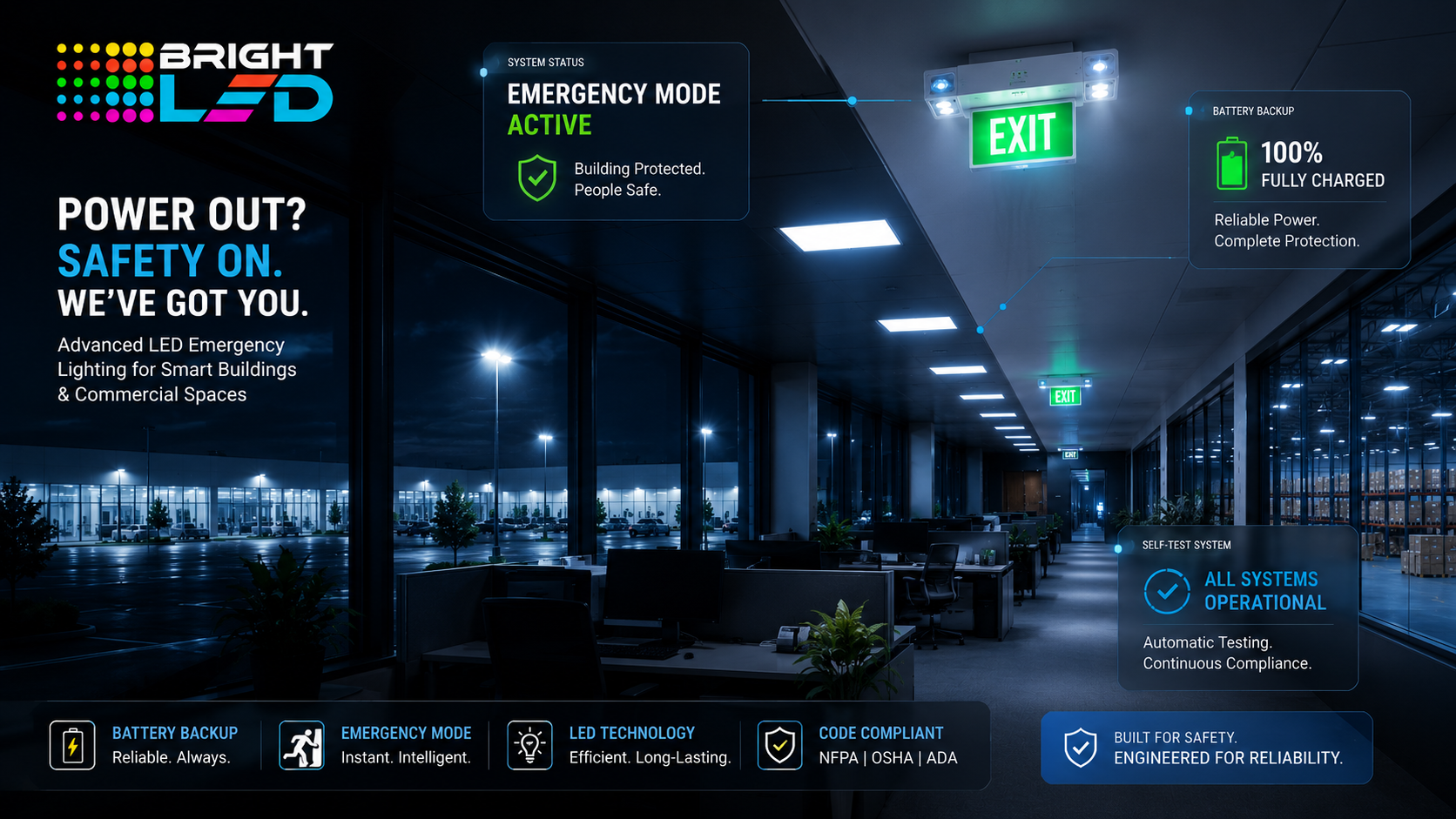
LED Emergency Battery Backup Systems for Commercial Lighting & Businesses
The moment that commercial facilities lose their power source, a swift shift takes place from full lighting to complete darkness within milliseconds. Panic sets in immediately, and at this point, it becomes the number one threat facing facility occupants. For facility managers, business owners, and engineers in 2026, it's not simply "code-required hardware." It's intelligent emergency illumination that can mean the difference between a complete power failure and an orderly evacuation plan put into motion. Especially when supported by reliable solutions like the UFO Emergency Driver 40W Billda, which ensures critical lighting continues during unexpected outages.
Regardless of whether you own a high-rise office block in the downtown core of a bustling city or a large distribution center near a major shipping port, it is important to understand what LED emergency lighting has to offer. This guide highlights some of the best LED emergency lights available in 2026, along with information about drivers, compliance certification, and more.
The Evolving Role of Emergency Lighting in 2026
For decades, emergency lighting consisted of ugly and unreliable "bug eye" fixtures which went unused for years before failing right when they were needed most. Today, however, emergency lighting has evolved to incorporate high-density lithium batteries and advanced sensor systems capable of performing diagnostic tests. Emergency lighting systems in 2026 comply with the "90-minute mandate" as outlined in the NFPA (National Fire Protection Association).
But while the core idea stays the same, that of ensuring an effective path of egress, the technologies involved have changed dramatically. Thanks to LEDs, companies now get brighter light output with much lower battery consumption. As a result, it is possible to ensure the necessary lighting in commercial premises without changing their appearance too much. Moreover, in today's world of constantly evolving power grids, it is smarter to rely on localized energy storage systems rather than centralized generators, which need some time to start functioning properly.
Powering the Perimeter: Parking Lot Lighting with Backup
Security doesn't end at the exit door, emergency exit signs. For most commercial facilities, the "path of egress" leads well beyond the building itself. The use of parking lot lighting systems with built-in emergency battery backups guarantees that no one will slip or fall in darkness, and there will be no security issues after leaving well-lit building premises.
As seen in 2026, the new trend involves "emergency-ready" area lights that run on full-power mode during normal operation and then switch to an energy-efficient "emergency mode" once a power outage is detected. This way, the device will reduce its current power draw from 150W to an appropriate level (10-20% of maximum) so as not to deplete the batteries during the 90-minute timeframe. This guarantees that the pathway to one's car or designated meeting place will be adequately lit for everyone. For companies operating across multiple locations around the world, the installation of IP65-compliant products complete with battery heaters becomes crucial for ensuring their proper operation regardless of the freezing temperatures or heavy rain.
Visual Clarity in High-Stakes Zones: Warehouse LED Lighting
A power outage in industrial facilities means serious risks. Forklifts, machinery, and warehouse racking systems make industrial premises quite dangerous to move around. This is why warehouse LED lighting systems with battery backups should be used.
In modern high bay applications, "emergency-ready integrated driver" is becoming more popular since there is no need for installing separate wall-mounted devices that fail to reach the ground from such great heights. By building the backup directly into the high bay, the light is delivered from the same optimal position as the general illumination. These units are often paired with LiFePO₄ (Lithium Iron Phosphate) batteries, which are preferred in 2026 for their ability to handle higher ambient temperatures found in industrial warehouses without degrading. When seconds count, the "instant-on" nature of LED backup ensures there is zero lag time, preventing machinery collisions during a sudden surge or outage.
Seamless Professionalism: Commercial Office Lighting
For corporate environments, the priority is often "invisibility." No one wants an architectural office suite marred by bulky, industrial-looking emergency boxes. Commercial office lighting makes it possible to incorporate such emergency drivers into thin LED modules.
They are almost identical to conventional installations. When there's a loss of power, the integrated battery switches on some parts of the LED light panel, resulting in a smooth and flickerless illumination, which helps the office employees to pack up and leave without being exposed to glaring spots. This kind of equipment can be combined with "self-testing" kits that automatically conduct the necessary 30-second monthly and 90-minute annual inspections, documenting the findings with the help of the tiny LED indicator lamp. Such a high degree of automation is one of the key benefits for property managers managing several floors without employing large maintenance personnel, as explained in this guide on LED emergency battery backup for commercial buildings.
Beyond this, proper compliance and safety planning in workplaces also depends on clear evacuation systems and signage strategies, which are detailed in this resource on LED emergency exit signs for businesses, warehouses, and offices.
The Strategic Choice: LED Retrofit Solutions
LED Retrofit Solutions has a lot to offer if your building needs an upgrade in terms of emergency equipment while having high-quality housings. Starting in 2026, "emergency backup kits" are the most sought after by facility managers who need an emergency grid upgrade without a costly reconstruction.
Typically, these retrofits include an LED driver, a battery pack, and a special wall switch that will allow normal operation of your lights with constant charging of the backup system. Such retrofits are especially suitable for conversions of linear fluorescent lighting into LED lighting since this solution will eliminate the need for outdated ballasts and emergency-rated LED drivers. These universal fixtures can be used with various light bulbs, including, but not limited to, corridor strips and recessed cans.
The Financial Logic: ROI of "Self-Testing" Systems
The highest hidden cost of emergency lighting isn't the electricity; it’s the labor. National fire codes require every emergency light to be tested for 30 seconds every month and 90 minutes once a year. In a 100,000-square-foot facility, this can take a maintenance team days to complete.
In 2026, investing in Self-Diagnostic (SD) LED fixtures offers a massive ROI. These units have an internal clock that performs the tests automatically. Whenever the battery starts malfunctioning or the LED board stops working, the status indicator turns from green into red. Rather than conducting inspections of each individual light bulb, you just go around and check the presence of red indicators, saving on labor costs by up to 80%.
Thermal Management and Sustainability
LiFePO₄ is an extremely durable type of battery chemistry that performs very well in high and low temperatures and requires many fewer charge-discharge cycles. This means that the backup lighting system can effectively work in ambient temperatures up to 140°F. Thus, if there is a blackout in the middle of a summer heatwave, you will have no problems with your emergency lights.
By implementing such systems, you will contribute to the environmental sustainability of your company as it relates to its ESG strategy. Since these backups last 7-10 years compared to 3-5 in older models, your company will produce half the amount of battery waste over a ten-year period. In addition, by switching to emergency-rated LED lighting, you will reduce mercury waste.
FAQs
How long do LED emergency batteries typically last?
Most LiFePO4 batteries are designed for a 7-to-10-year lifespan. However, in high-heat environments, we recommend a proactive inspection every 5 years to ensure the 90-minute runtime is guaranteed.
Does "Emergency Mode" mean the light is just as bright?
Usually, no. To save battery, most emergency drivers operate at 10% to 20% of the fixture’s maximum wattage. This is legally sufficient to meet the 1 foot-candle average requirement for egress paths while ensuring the battery lasts for the full duration.
Can I use a standard LED bulb in an emergency fixture?
Only if the fixture has a dedicated emergency battery backup and driver, a standard LED bulb has no "memory" or power storage; once the grid goes down, it goes out unless it is supported by a UL 924-listed backup system.
What is the difference between "maintained" and "non-maintained" emergency lights?
Maintained lights stay on all the time (acting as regular lights) and switch to battery during a failure. Non-maintained lights only turn on when the power fails.
Conclusion
The safety of your business goes beyond fulfilling a fire marshal requirement. This is about creating a place of work where everyone feels safe. Through implementing effective high-wattage LED warehouse lights, covert commercial office lights, and robust parking area lights with backups, you take care of your obligations in a productive manner.
Do not test your batteries' capabilities in the event of the next power outage. Ensure that you are prepared ahead of time with a comprehensive LED emergency system.


-
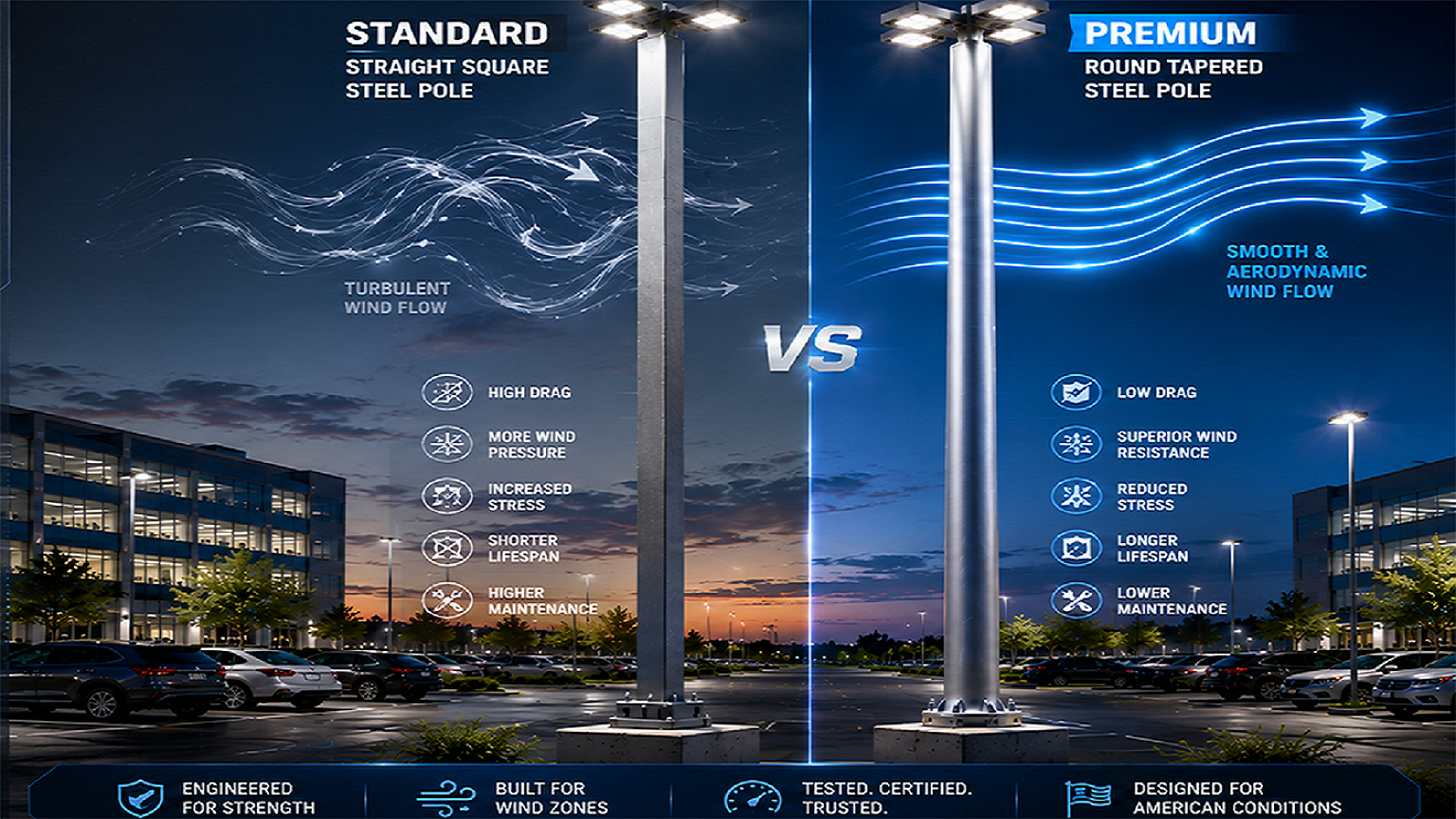
Straight vs. Tapered Light Poles: Which Offers Better Structural Integrity?
 June 9, 2026
 -
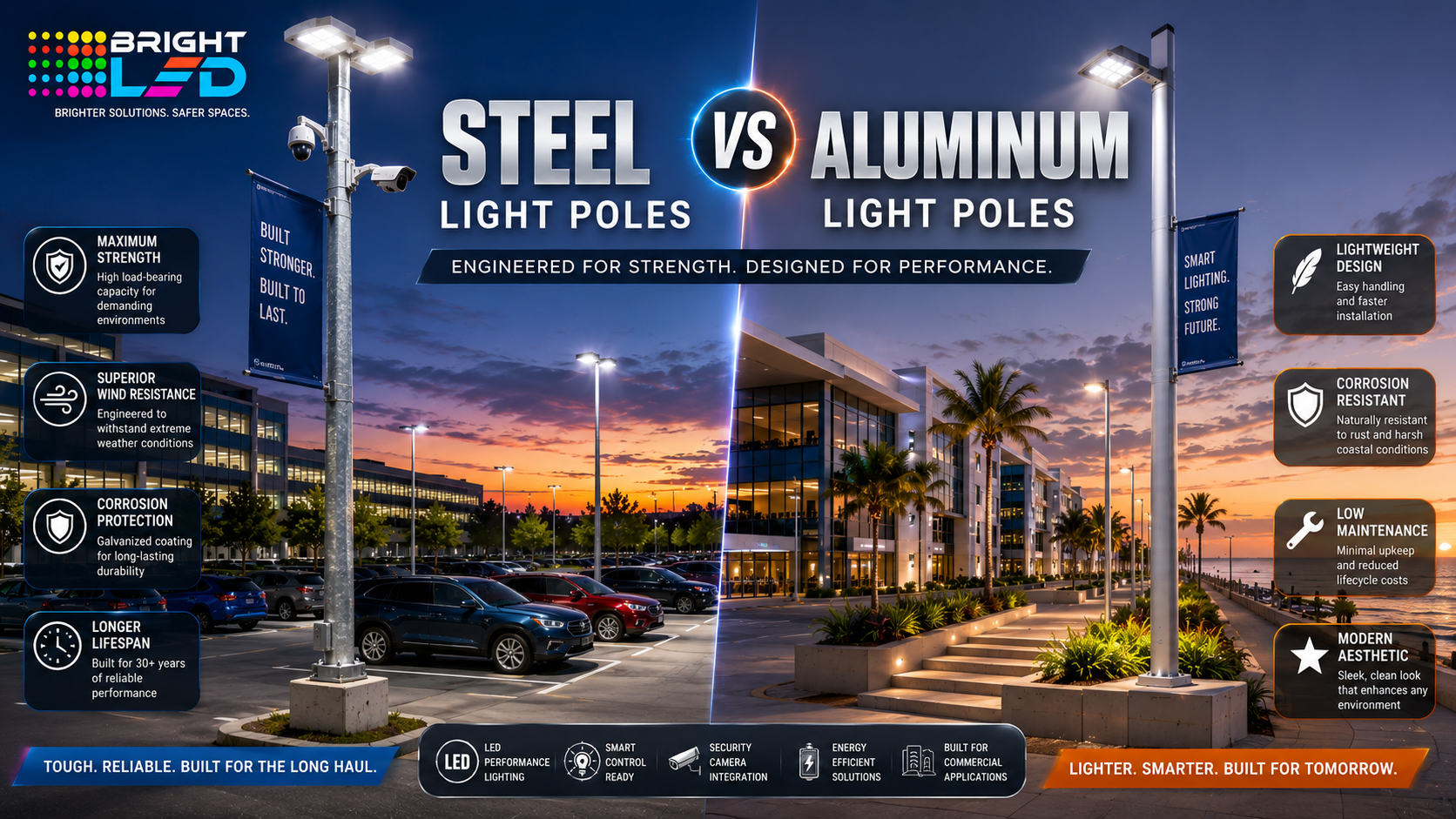
How to Choose the Right Commercial Light Pole: Steel vs. Aluminum
 June 5, 2026
 -
Best Practices for Specifying Round Steel Poles for Commercial Parking Lots
 June 2, 2026
 -
LED Emergency Exit Signs: Installation Guide for Commercial Buildings (2026)
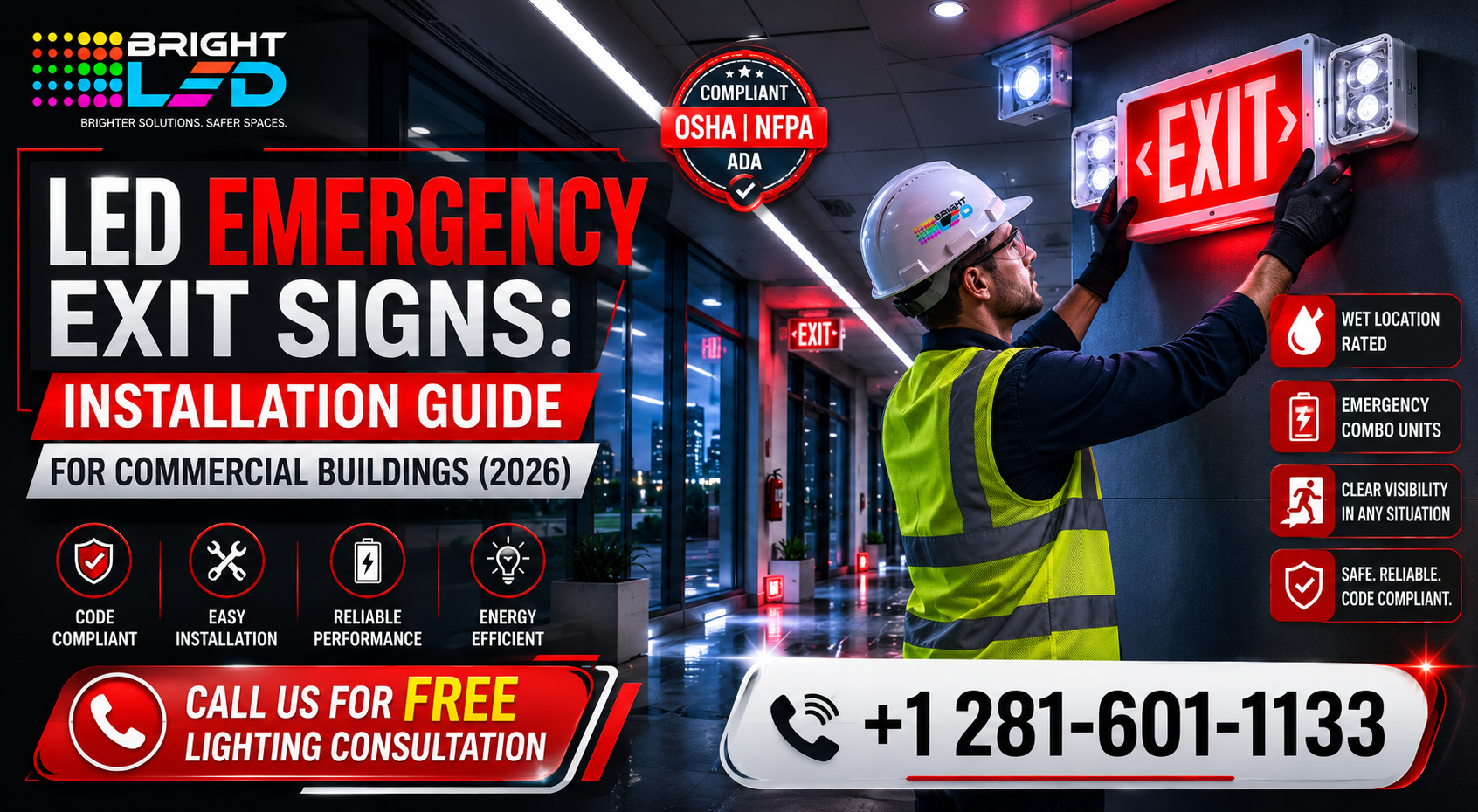 May 26, 2026
 -
LED Emergency Battery Backup Systems for Commercial Lighting & Businesses
May 23, 2026