
LED Emergency Exit Signs: Installation Guide for Commercial Buildings (2026)
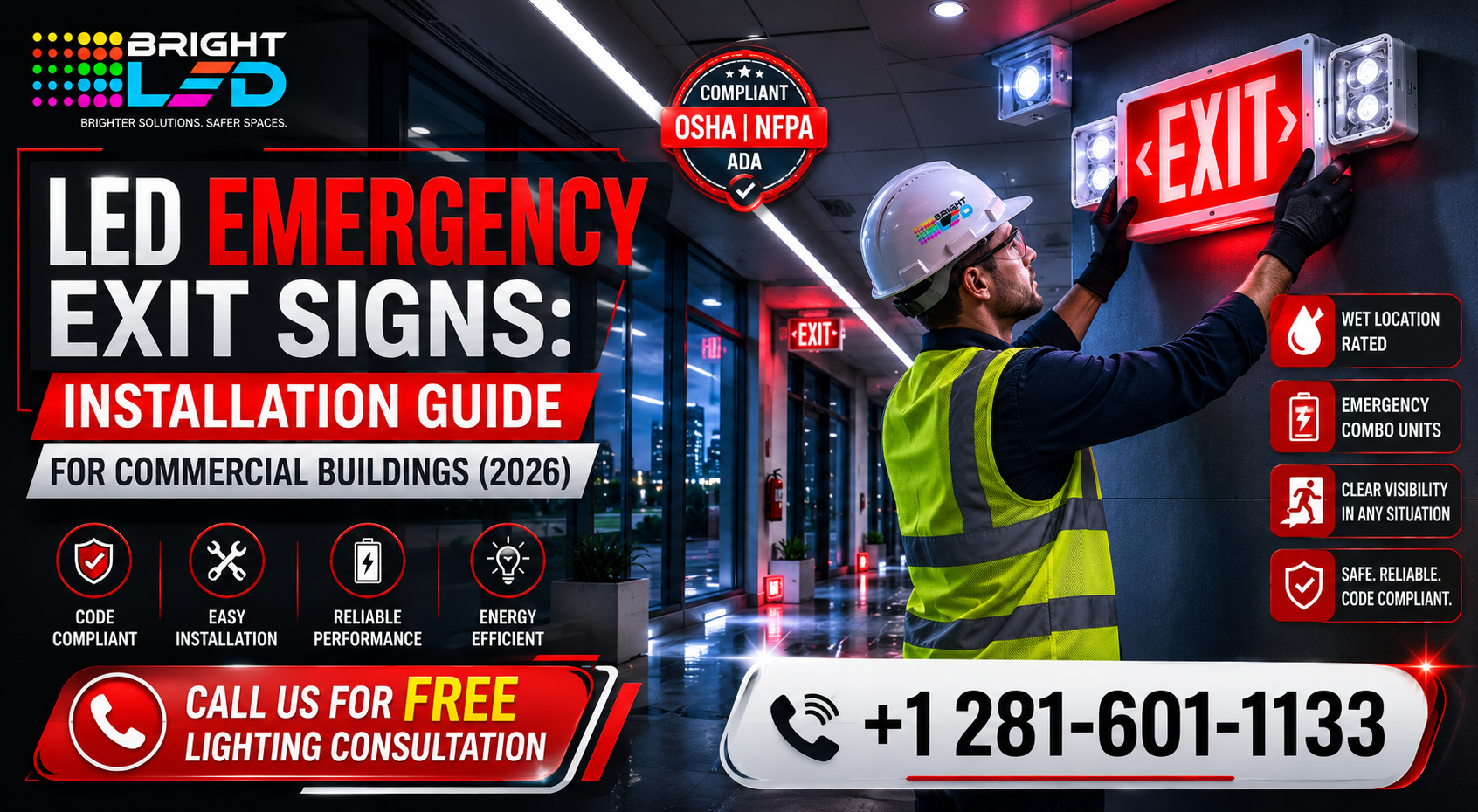
LED Emergency Exit Signs: Installation Guide for Commercial Buildings (2026)
In the competitive sphere of commercial facility management, the thin line between life and tragedy often depends on one crucial element: a reliable glow-in-the-dark sign. As soon as there is darkness due to a lack of power supply or thick smoke fills the room, one's brain stops thinking rationally and becomes fully controlled by natural survival instincts. The only source of hope in those frightening moments becomes a distinct, reliable, and legally adequate exit sign.
By 2026, the technologies of making LED emergency exit signs have evolved greatly, turning into an extremely efficient and smart component of building safety systems. But even the most advanced product becomes just another ordinary plastic fixture when incorrectly installed or not meeting the tough requirements of OSHA and NFPA 101. And this guide will help you navigate the tricky path of installing and maintaining such systems and turn your building into a shelter of safety and efficiency.
Introduction
Exit signs can be considered one of the most important yet unattended aspects of building infrastructure. Installation of such critical safety measures requires a careful approach and professional skills. It is a legal and ethical mandate.
The industry today does not rely on old lighting methods anymore. Standards today include highly efficient LEDs, intelligent self-diagnostic circuitry, and new types of batteries such as LiFePO₄. The first step in any implementation process involves marking what is known as the means of egress, which is an unbroken, clear path of travel from any location within the structure to a public way. When you follow standards established by the Occupational Safety and Health Administration (OSHA) and the National Fire Protection Association (NFPA) strictly, you are doing more than avoiding costly fines; you are ensuring that everyone entering your building remains safe.
Types of LED Exit Signs
The "one size fits all" approach of the '90s gave way to a more personalized market. Depending on the unique characteristics of your building, the environment it is located in, and its aesthetics, you must choose a proper solution.
Thermoplastic Exit Signs
These are the "workhorses" of commercial lighting. Made out of high-impact, flame-resistant thermoplastic, they are affordable and light. They are the best option for office buildings, stores, or classrooms.
Edge-Lit LED Exit Signs
Whereas "industrial"-grade equipment would appear out of place in a luxurious office environment, the best signage option is a highly sophisticated edge-lit system. This design includes an acrylic panel with etched letters and a thin housing made of aluminum or brass that houses the LED lights.
LED Exit/Emergency Combo Units
Such fixtures provide double the functionality, which is important for large buildings like hotels or commercial office spaces. Apart from having the "EXIT" sign, the LED Emergency Exit Combo unit also includes two adjustable emergency lamps that can be directed according to specific requirements, helping illuminate corridor floors effectively during power outages.
Wet-Location and NEMA 4X Signs
Normal signs cannot withstand the conditions present in some facilities. If your building involves any wet location, then a d-bell outdoor emergency unit comes hermetically sealed to resist water, ice, and chemical corrosion. These units are ideal for parking areas, outdoor pathways, and industrial washing environments.
Key Features to Look For
The following are some of the requirements that you must consider when sourcing hardware in 2026:
● Self-Diagnostic (SD) Circuitry: This is no longer a luxury. LED Emergency Battery Backup units automatically perform the mandatory monthly 30-second and annual 90-minute tests required by fire marshals. They use a small status LED to signal if the battery or lamp needs attention, saving you hundreds of hours in manual labor.
● LiFePO₄ Battery Chemistry: While older models relied on the traditional lead-acid or Ni-Cd chemistry, current ones are made with lithium iron phosphate (LiFePO₄). The latter offers improved performance in the Texas heat, is lightweight, and lasts for at least 10 years without replacement.
● UL 924 Listing: This is the non-negotiable gold standard. If a sign is not UL 924 listed, it is not legally recognized as an emergency device in the United States.
● Dual-Voltage Inputs: Most commercial buildings run on either 120V or 277V power. Ensure your signs are "universal voltage" to prevent wiring mishaps.
Best Use Cases
Every corner of your business has a different safety profile. Matching the sign to the room is a critical part of a human-centric installation.
● Logistics and Warehouses: Industrial hubs need NEMA-rated Combo Units. Because ceilings are high and dust is prevalent, you need sealed units with high-lumen output heads that can reach the floor from 40 feet up.
● Corporate High-Rises: In professional offices, edge-lit recessed signs provide a clean, invisible look that maintains the architectural integrity of the space without sacrificing visibility.
● Parking Garages and Coastal Sites: These areas face humidity and temperature swings. Use wet-location signs with internal heaters. The heater will keep the battery warm during the winter months and prevent it from freezing, thus maintaining the 90-minute back-up requirement. This is especially important in facilities that rely on reliable Parking Lot Lighting solutions for safety and visibility during emergencies.
● Schools and Public Venues: In areas prone to "horseplay" or vandalism, choose steel-cased or vandal-resistant signs with polycarbonate shields. These can take a direct hit without losing their functionality.
Buying Guide
Purchasing fire-safety equipment is different from buying light bulbs, and it calls for a strategic audit of your property.
- Perform a visibility Walk: Stand at the end of every hallway. Can you see a sign? NFPA requires that the sign be visible from no further than 100 feet away. A 300-foot hallway, it means you need several signs.
- Verify Local Color Codes: Even though red is universally recognized, many jurisdictions are changing to green (which means "Go/Safety"). Many cities have their own specific color codes, including Chicago and New York City. Check with your local fire marshal before placing a large order.
- Check for Utility Rebates: Many 2026 energy programs offer significant "per-fixture" rebates for businesses that replace old incandescent signs with high-efficiency LEDs.
- Confirm the "90-Minute" Rule: Every emergency sign sold in the US must provide at least 1.5 hours of illumination on battery power. Do not settle for less.
Cost vs. Value
A standard thermoplastic sign might cost $25, while a self-diagnostic unit might cost $75. On paper, the cheaper sign looks like a budget win. In reality, it’s a long-term expense.
The true cost of an exit sign is the maintenance labor. NFPA 101 mandates that every sign be manually tested once a month. If you have 50 signs, a maintenance worker must spend a full day every month walking around with a ladder and a stopwatch. Over a five-year period, the labor cost for a "cheap" sign can exceed $1,000. By contrast, a self-diagnostic sign performs these tests itself, meaning your staff only spends time fixing the few units that show a red failure light. The high-value choice is always the one that automates compliance.
Installation Overview
Disclaimer: While this information provides a broad understanding of code requirements, please engage a professional licensed electrician to do the high-voltage work to keep your building's warranty and insurance valid.
Strategic Placement
You should place the sign on all exit doors and at any turning point within a hallway. If the occupant needs to turn the corner to see the exit, then you must place a sign with a directional chevron (arrow). You may only punch out the arrow that directs the occupants to safety. A double-ended arrow that goes in both directions will lead to tragedy if someone is lost in the smoke.
Proper Mounting Height
The "Egress Path" starts at the floor. The sign shall be placed above the door; the bottom of the sign shall not be more than 80 inches from the finished floor. In modern 2026 designs, "low-level" exit signs are also being installed 18 inches off the ground, as this is where the air is clearest during a fire.
The ADA Requirement
For every illuminated sign above a door, you must have a corresponding tactile ADA sign on the wall. This particular sign needs to have Grade 2 Braille and raised letters. The sign has to be placed on the latch side of the door and at the location where it is easy to reach (48-60 inches).
Electrical Integrity
The exit signs need to have their own circuit. They cannot share the circuit with the other devices, and the exit signs cannot be controlled using a wall switch. This means that even if someone switches the lights off before leaving the building at the end of the working day, the exit signs will still be on.
FAQs
Do LED exit signs ever "burn out"?
The lifetime of the LED is estimated at around 50,000-100,000 hours approximately 10 years of continuous work. On the other hand, the lifetime of batteries used in the emergency lighting system will be around 5-7 years.
Can I use "Glow-in-the-Dark" signs to save on electricity?
Photoluminescent signs are legal as long as they have been properly charged by the right level of illumination. These signs cannot function in basements or other poorly lit spaces during the daytime hours.
What color should I choose, red or green?
That depends on the regulations of your municipality. In the absence of any specific city code, you should decide according to your own personal preferences. But remember that consistency is important. You should avoid mixing red and green signage in the same building because it can lead to misunderstandings in an emergency situation.
Is it illegal to have a "NOT AN EXIT" sign?
Absolutely! All doors that could be confused for exits need to have a sign stating "NOT AN EXIT". Otherwise, people might get trapped inside a storage space.
Conclusion
Choosing UL-listed LED emergency exit signs for installation in 2026 will be your way of showing responsibility. It's your duty to the people who use your property daily. Selecting only those products with UL 924 approval will make your safety system legally compliant. Using the diagnostic feature of the LED signs will help reduce costs and improve maintenance.
Don't wait for a power failure or a surprise visit from the fire marshal to audit your exits. Take a walk through your facility today. Step into your employee's shoes and look for the glow. Make sure that your employees see their escape route as clearly as possible.


-
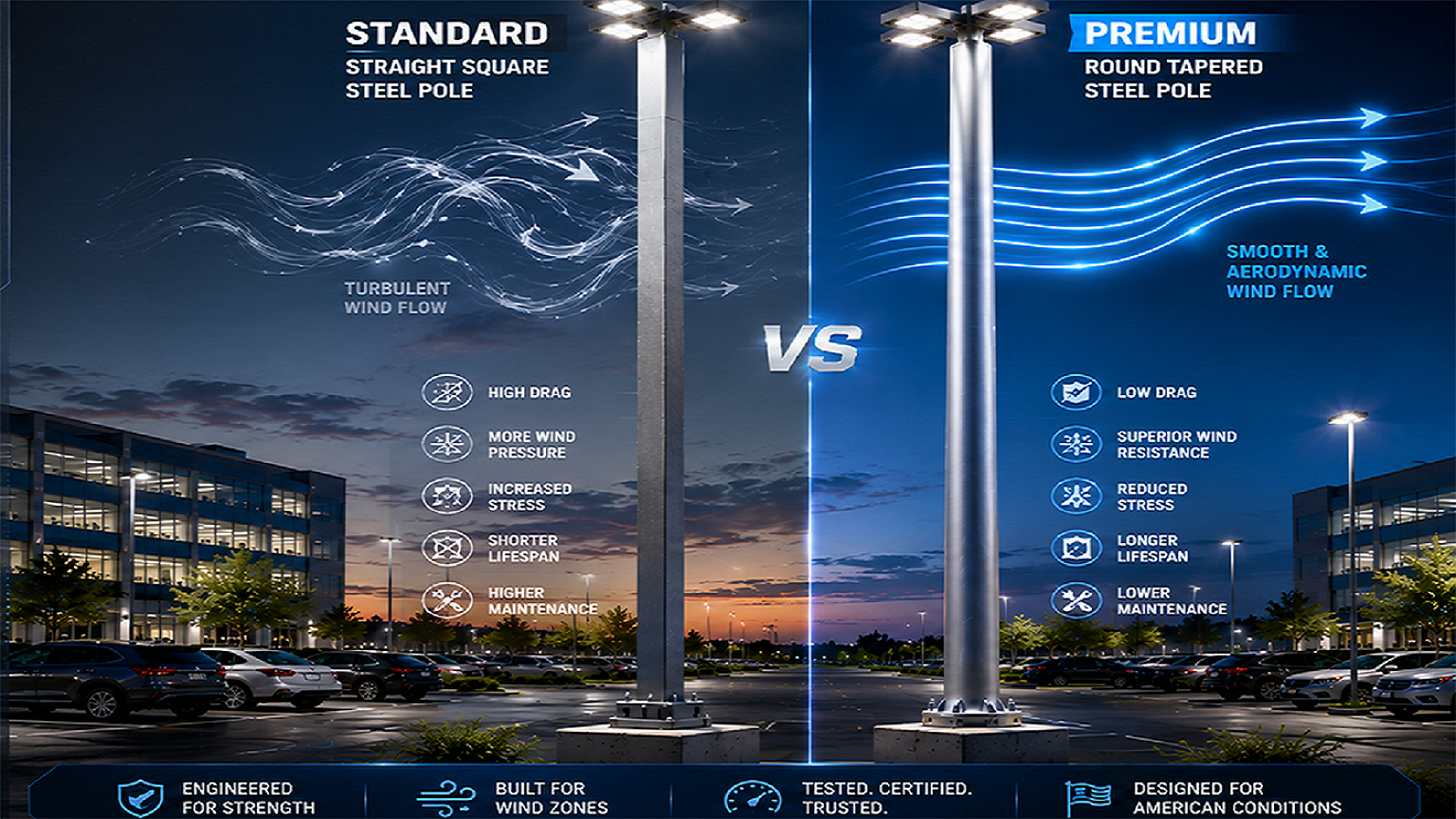
Straight vs. Tapered Light Poles: Which Offers Better Structural Integrity?
 June 9, 2026
 -
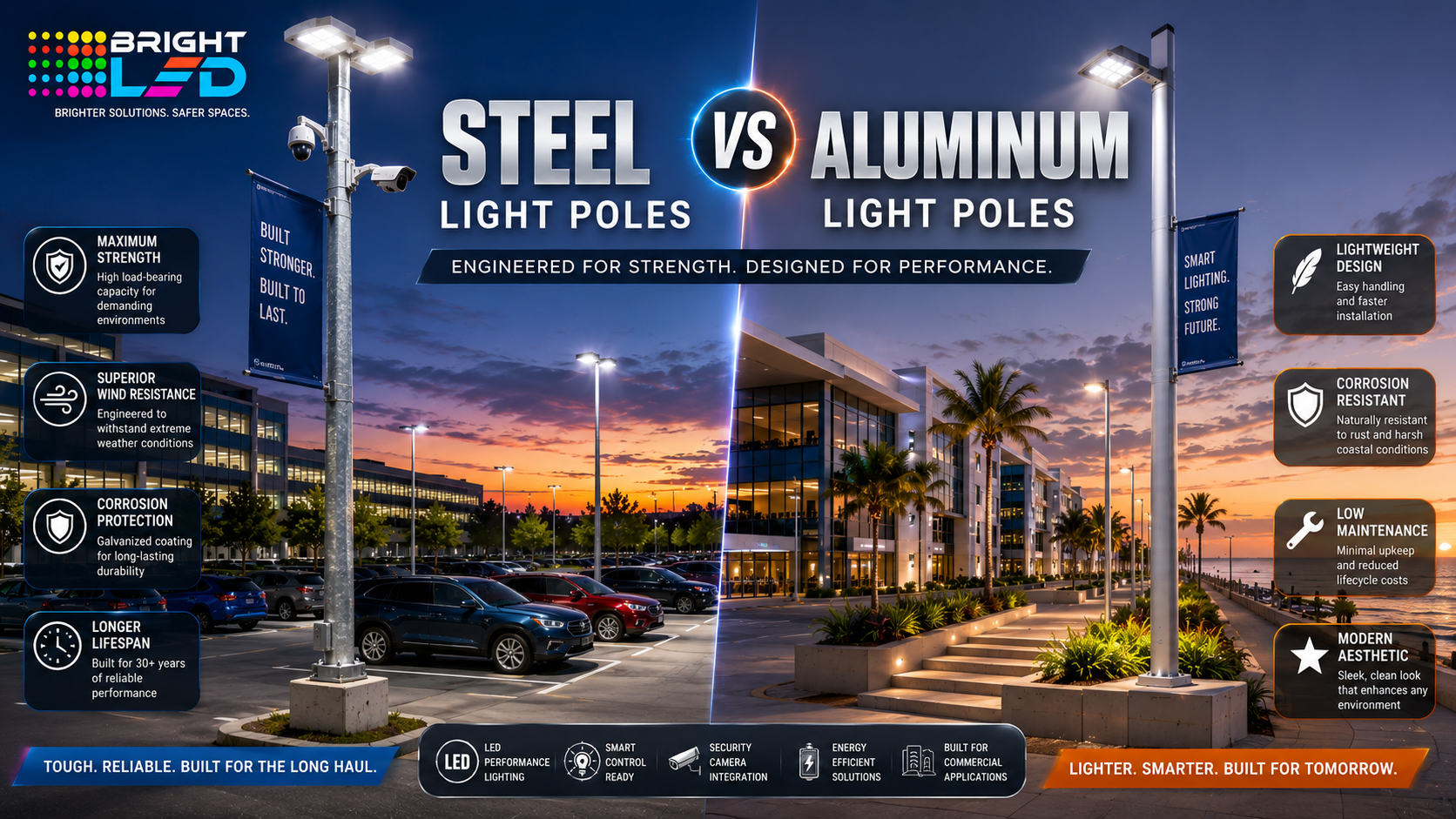
How to Choose the Right Commercial Light Pole: Steel vs. Aluminum
 June 5, 2026
 -
Best Practices for Specifying Round Steel Poles for Commercial Parking Lots
 June 2, 2026
 -
LED Emergency Exit Signs: Installation Guide for Commercial Buildings (2026)
May 26, 2026
-
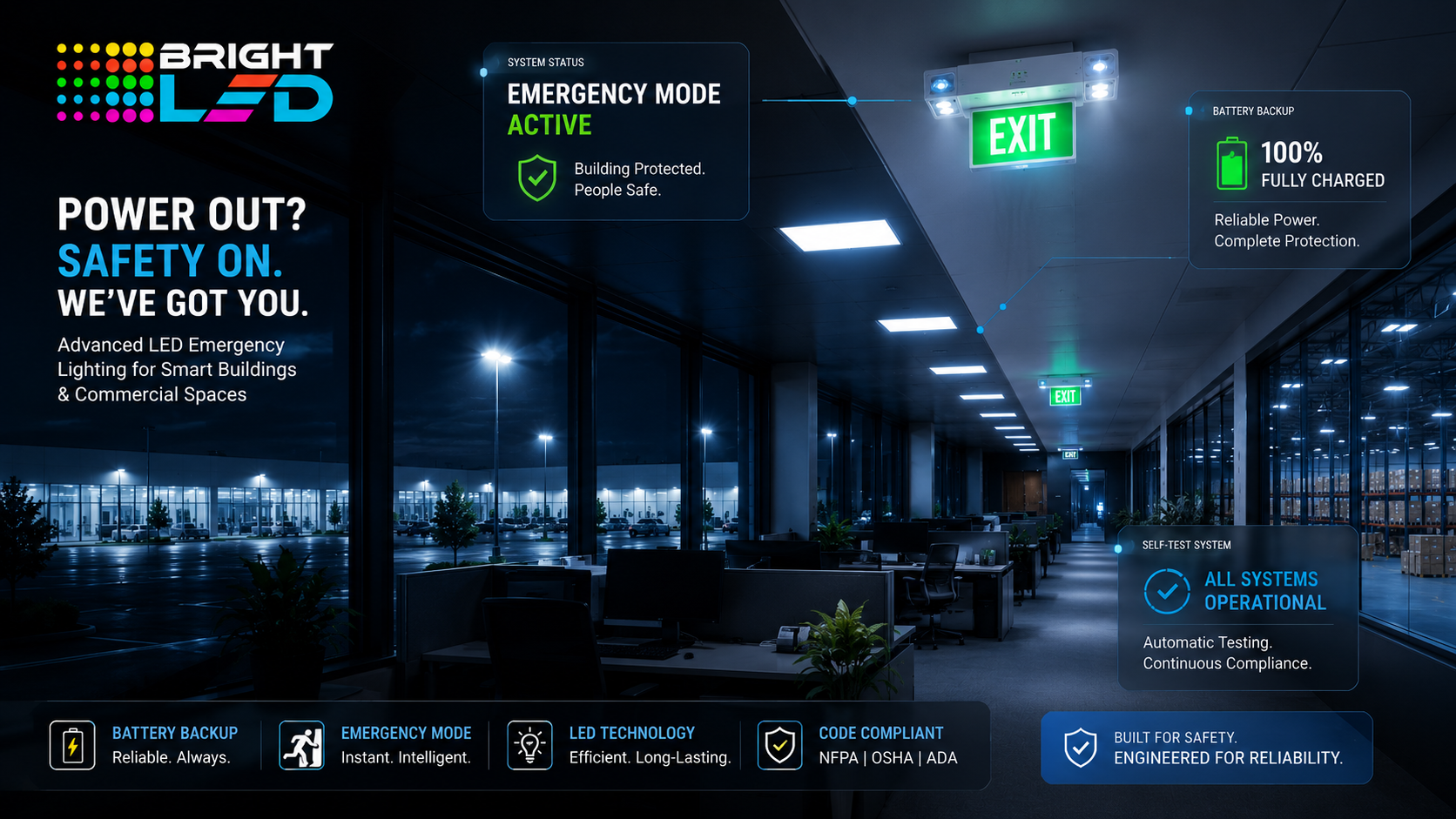
LED Emergency Battery Backup Systems for Commercial Lighting & Businesses
 May 23, 2026