
Industry-Specific Guides (Warehouses, Retail Stores, Offices, Parking Lots, Etc.)
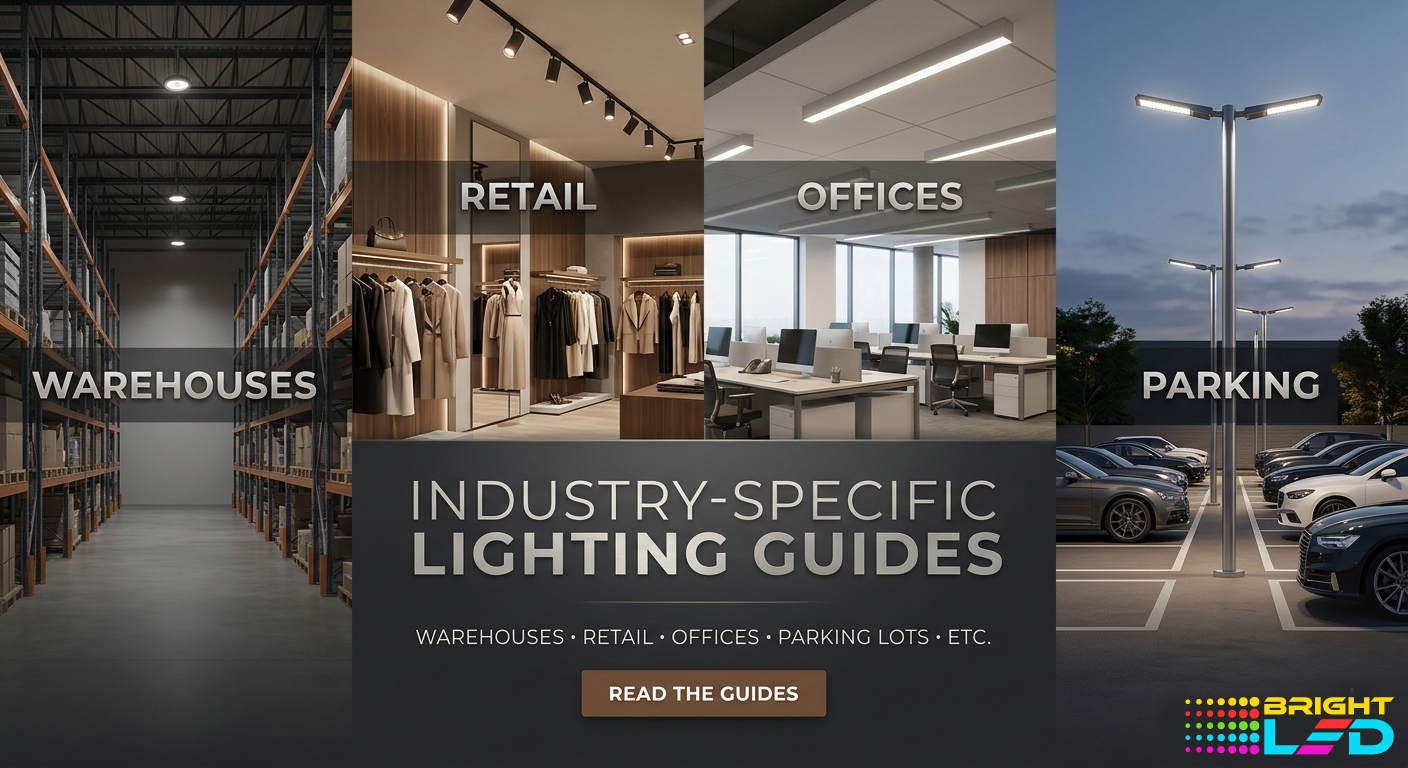
Industry-Specific Guides (Warehouses, Retail Stores, Offices, Parking Lots, Etc.)
Every commercial space in Texas has a unique "energy personality." A center with high turnover of fulfilment will have vastly different lighting requirements than a boutique retail Centre in Austin Domain or a corporate head office in Dallas in the Centre of town.
The use of a single size of LED lighting can very well lead to wastage of energy, poor visibility, or cause discomfort to employees. In order to get the most ROI of your lighting system, you have to have the appropriate lighting in your industry. Investing in Bright LED TX commercial LED lighting solutions in Texas ensures that your facility is equipped with energy-efficient, industry-specific lighting tailored for performance and long-term savings. This source will indicate the requirements of the most popular sectors in the Lone Star State.
Warehouses & Logistics Hubs
In the world of Texas logistics, lighting is a safety tool and a productivity driver. The objective is to eliminate shadows in deep aisles and provide the ability for an employee to read small labels at the bottom of a 40-foot rack as easily as the top of the rack.
Technical Priorities
● Vertical Footcandles: Standard lighting measures brightness on the floor, but warehouses need light on the vertical face of the racks.
● Narrow Optics: High-bay fixtures should use 60° or 90° beam angles to "punch" the light down into the aisles rather than wasting it on the tops of pallet racks.
● High-Ambient Ratings: As we’ve noted, Texas warehouse ceilings reach extreme temperatures. Only install luminaires that have a temperature rating of 55°C (131°F) or higher to avoid premature failure of the driver.
Retail Stores & Showrooms
In the retail industry, lighting is the silent salesperson and its objective is to attract customers and draw them through the store while showcasing the texture and look of the merchandise.
Technical Priorities
● The CRI Factor: You must use CRI 90+ lighting. Low-quality LEDs make clothing look dull and food look unappealing. High CRI ensures that the "Texas Red" on a showroom floor looks exactly as intended.
● Layered Lighting: A combination of ambient and track lighting can be beneficial for highlighting the merchandise and creating focal points for higher-margin displays.
● Warmth vs. Utility: The new Texas retail trend is towards a 3000K to 3500K range, which gives a "hospitality" feel, allowing the customer to stay a while.
Tech & Corporate Offices
For the growing "Silicon Hills" of Austin and the financial centers of Dallas, the priority has shifted from simple illumination to Human-Centric Lighting (HCL) and eye comfort.
Technical Priorities
● Glare Reduction: Reflective computer screens and "flickering" lights are the primary causes of workplace headaches. Use UGR < 19 (Unified Glare Rating) fixtures to protect employee vision.
● Flicker-Free Drivers: Ensure that your drivers are less than one percent flicker. This is a minor modification, but practically will actually reduce the number of fatigues in the afternoon.
● Smart Dimming: Add sensors to your lighting, allowing for "daylight harvesting." If a conference room is not being used, it should not be costing you money.
Parking Lots & Exterior Security
It is not only about seeing the light in Texas, but it is about liability and security. A parking lot with sufficient lighting will reduce the risk of car accident, not to mention in deterring a criminal activity. As explained in our blog on the benefits of LED lighting for commercial spaces, upgrading to modern lighting solutions can significantly enhance safety, visibility, and overall site security.
Technical Priorities:
● Full Cutoff Fixtures: To comply with many Texas "Dark Sky" ordinances, exterior lights should point 100% of their output downward. This prevents light pollution and annoying "spill" into neighboring properties.
● High Output, Low Maintenance: The labor costs of replacement are high, given the high poles these lights are placed on, so make sure the lights have a 10-year warranty and surge protection, designed to withstand Texas thunderstorms.
● Color Temperature (4000K-5000K): A lower light temperature is better for security cameras, allowing for better "facial recognition.
Texas Commercial Lighting Specification Matrix
|
Industry |
Recommended Kelvin |
Minimum CRI |
Key Feature |
|
Warehouse |
5000K |
80 |
Motion Sensors / High-Heat Rating |
|
Retail |
3000K – 3500K |
90+ |
Accent Track Lighting |
|
Office |
3500K - 4000K |
85+ |
Flicker-Free / UGR < 19 |
|
Parking Lot |
5000K |
70 |
Surge Protection / IP66 Rating |
FAQs
Can I use the same LED high-bay in my warehouse and my retail area?
Technically, yes, but we don't recommend it. A warehouse high bay is designed for raw power and vertical throw, which can be too harsh and "glary" for a retail setting. Retail requires higher color accuracy (CRI) and softer diffusion to make products look their best.
Why is "Flicker-Free" so important for offices?
Traditional fluorescent lights and cheap LEDs flicker at a rate the eye can't see but the brain processes. This leads to eye strain, irritability, and "brain fog" by 3:00 PM. High-quality Bright LED office panels use drivers that provide a perfectly steady stream of light.
How does "Daylight Harvesting" work in a Texas office?
Austin and Dallas get a massive amount of natural sunlight. Daylight sensors are able to detect the amount of brightness entering the house through the windows and they dim the sets of LEDs nearest to the window. This is so that you are assured of the appropriate quantity of lights as well as you save 30 or above on the lighting bill.
What is the best light for security cameras in a parking lot?
Cool White (5000K) is better in terms of security. It is the most contrasted, and therefore, AI-based security systems and human watchers find it easier to differentiate the colors of clothes and details on the license plates in the dark.
Are there specific Texas codes for parking lot lighting?
Yes, many Texas municipalities have "light trespass" laws that prevent your lights from shining into public roads or residential homes. We use photometric mapping to ensure your light stays exactly where it belongs: on your property.


-
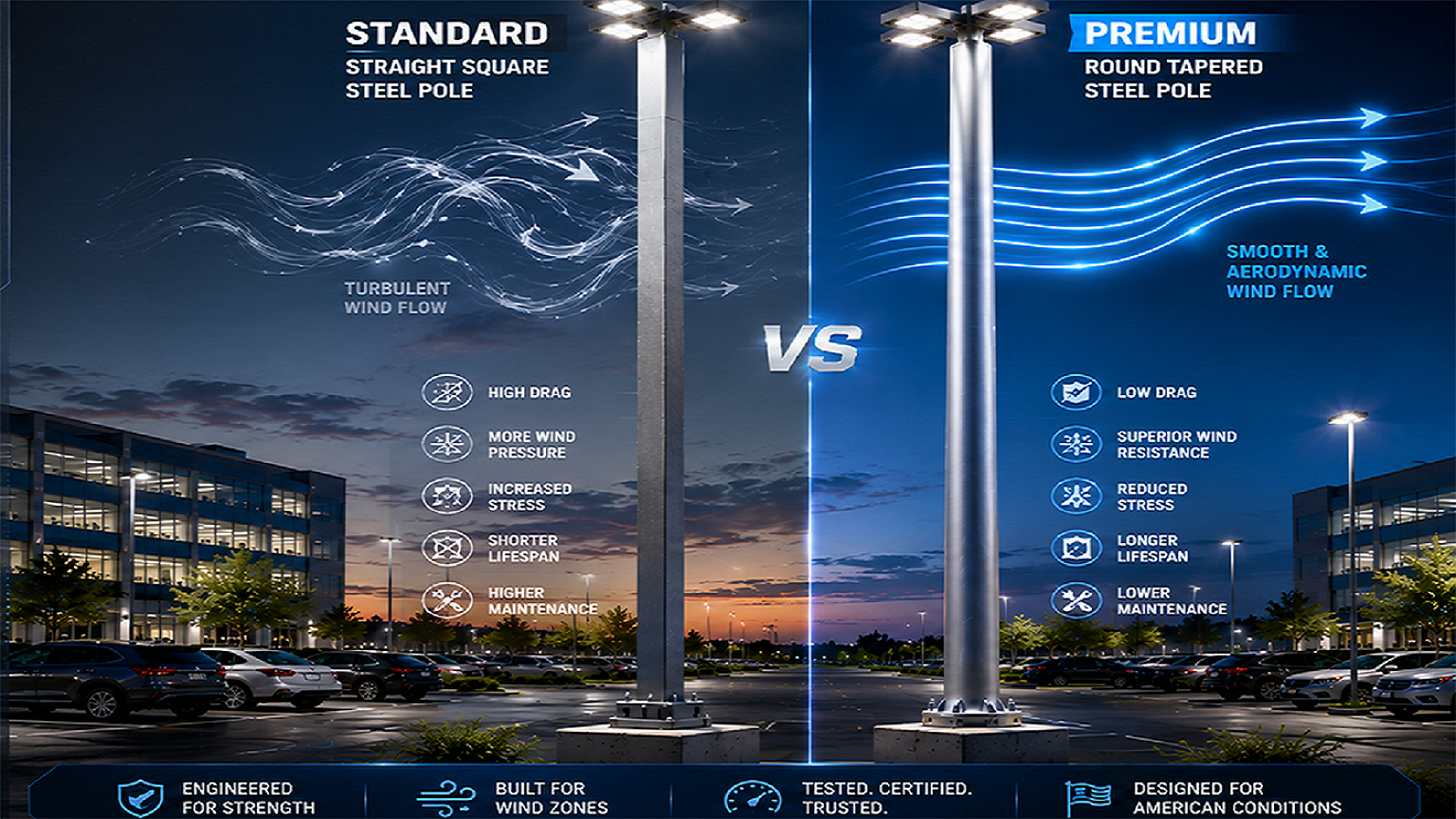
Straight vs. Tapered Light Poles: Which Offers Better Structural Integrity?
 June 9, 2026
 -
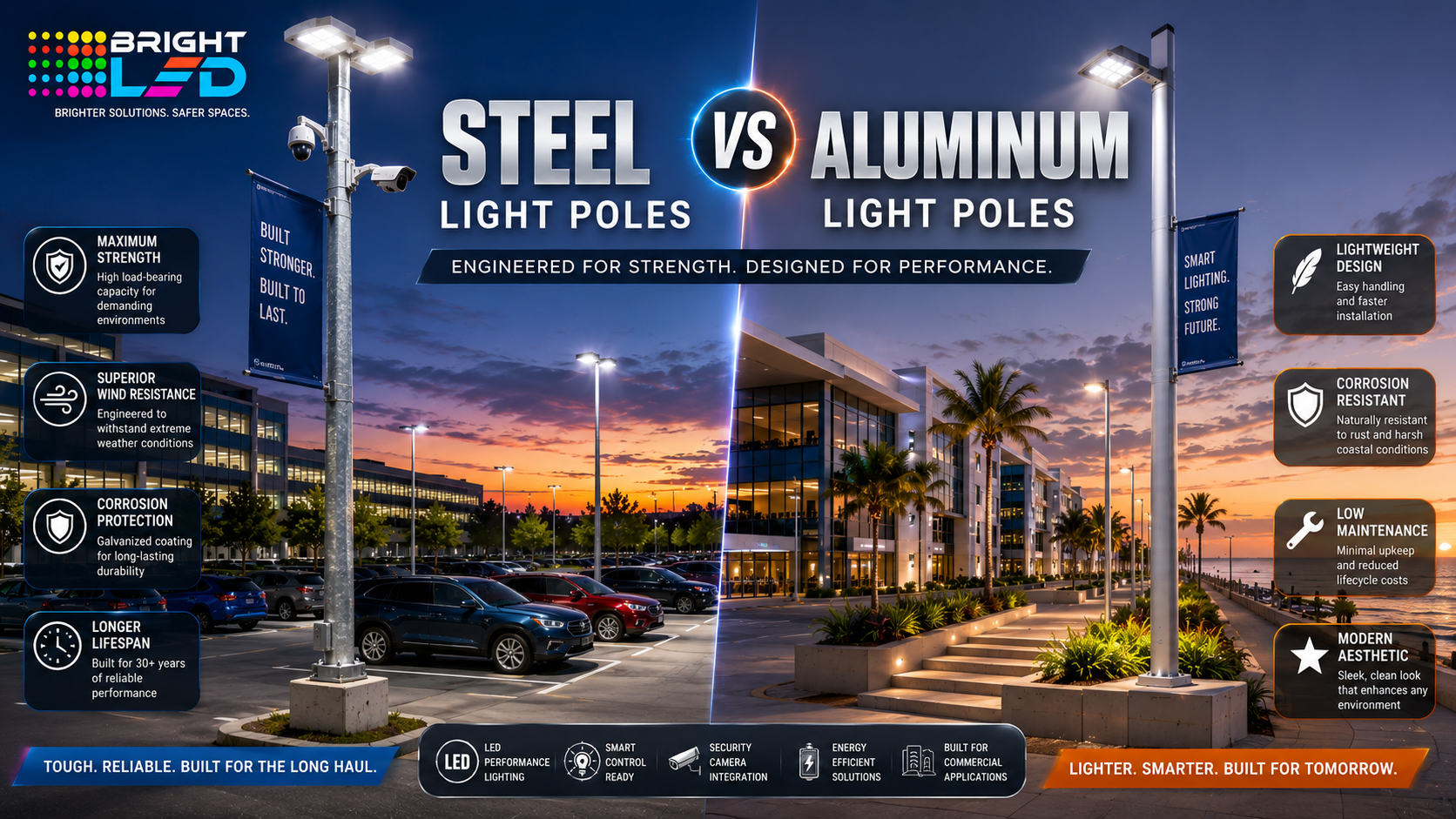
How to Choose the Right Commercial Light Pole: Steel vs. Aluminum
 June 5, 2026
 -
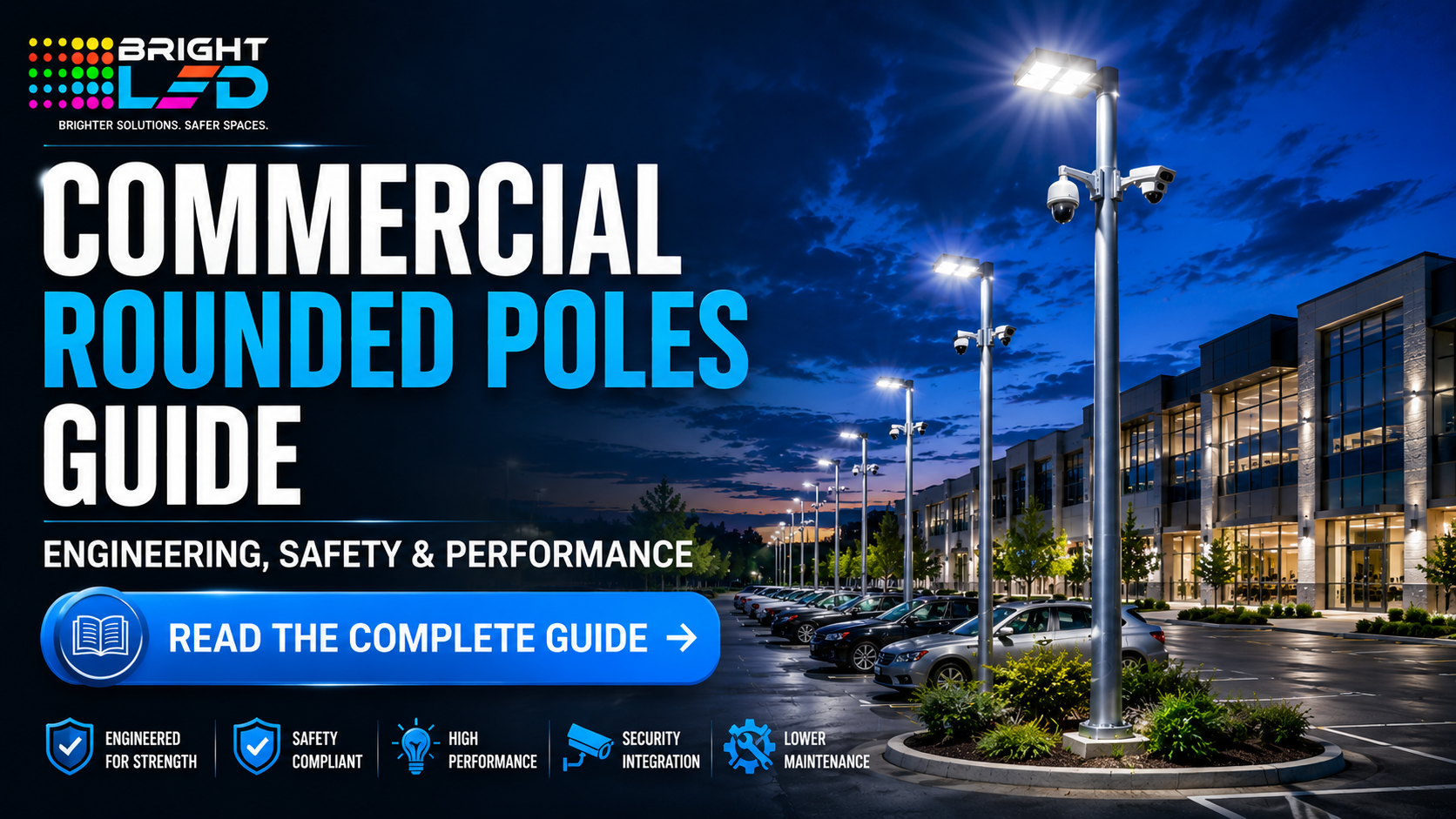
Best Practices for Specifying Round Steel Poles for Commercial Parking Lots
 June 2, 2026
 -
LED Emergency Exit Signs: Installation Guide for Commercial Buildings (2026)
 May 26, 2026
 -
LED Emergency Battery Backup Systems for Commercial Lighting & Businesses
 May 23, 2026