
LED Lighting Trends for Commercial Spaces in 2026
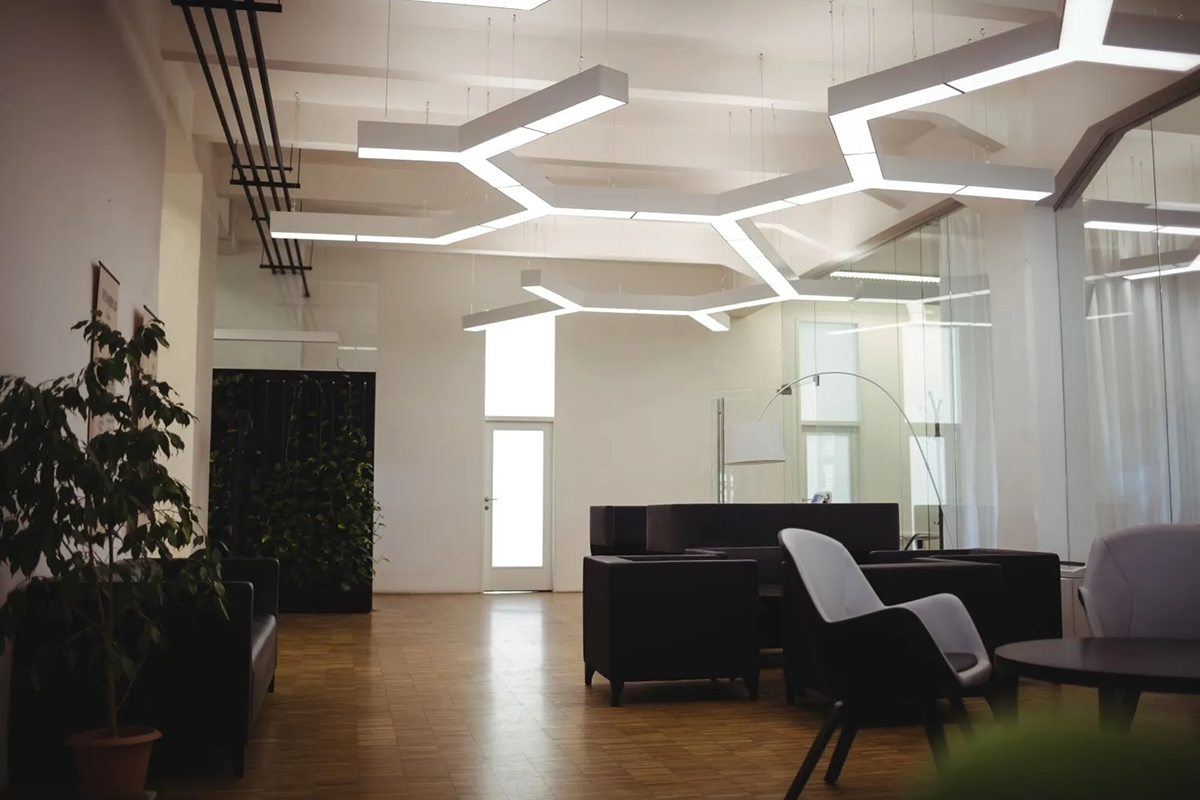
LED Lighting Trends for Commercial Spaces in 2026
Commercial lighting is advancing faster than ever. As energy regulations tighten, sustainability goals become measurable benchmarks, and smart building technologies become standard, businesses across the United States are upgrading to high-performance LED systems that offer efficiency, durability, and long-term return on investment.
Whether planning a retrofit or designing a new commercial facility in 2026, understanding modern lighting trends helps decision-makers select solutions that balance performance, compliance, and cost control.
This guide outlines the most important LED lighting trends shaping warehouses, offices, exterior spaces, and emergency systems in 2026.
Why LED Continues to Lead Commercial Lighting
LED technology is no longer an emerging option — it is the industry standard. Commercial property owners rely on LED systems because they offer:
- 50–75% lower energy consumption compared to HID and fluorescent systems
- Reduced maintenance costs due to longer lifespans (50,000–100,000+ hours)
- Improved light uniformity and visual comfort
- Lower heat output, reducing HVAC strain
1. Intelligent High Bay Lighting for Warehouses
Industrial spaces, logistics centers, and manufacturing facilities demand high-output lighting with maximum efficiency.
UFO High Bay
The UFO High Bay fixture remains a leading solution for warehouses with ceilings ranging from 15 to 40 feet. Its compact design and superior heat dissipation make it ideal for high-temperature environments.
Key advancements in 2026 include:
- Integrated motion sensors
- 0–10V dimming capability
- Higher efficacy ratings (150–200 lumens per watt)
- Enhanced thermal management systems
Businesses replacing 400W metal halide systems with LED UFO High Bay fixtures often experience significant energy savings and improved illumination quality.
Linear High Bay
For facilities requiring wide, uniform light distribution — such as retail warehouses and gymnasiums — the Linear High Bay is increasingly preferred.
Its elongated design reduces shadowing in aisle-based layouts and improves task visibility. Adjustable wattage and tunable color temperature features are now standard in many models, allowing customization based on operational needs.
Led Vapor Fixtures
In environments exposed to moisture, dust, or debris, Led Vapor fixtures provide sealed protection and dependable performance. Parking garages, storage units, and food processing facilities benefit from these rugged solutions.
Led Tube Light Retrofits
Many schools and office buildings are opting for Led Tube Light retrofits instead of full fixture replacements. This approach upgrades performance while maintaining existing housings, lowering upfront costs.
2. Modern Interior & Architectural Lighting
Commercial interiors are shifting toward minimalism, clean ceiling lines, and enhanced visual comfort.
Panel Light & Back Lit Systems
The modern Panel Light has largely replaced traditional fluorescent ceiling fixtures. Today’s models feature slim profiles, uniform light diffusion, and flicker-free drivers.
Back Lit panel systems are gaining traction due to improved efficiency and consistent brightness across the panel surface.
These fixtures are widely used in:
- Corporate offices
- Healthcare facilities
- Educational institutions
Troffer Advancements
The Troffer remains relevant in drop-ceiling environments but has evolved significantly. Modern LED troffers now integrate:
- Smart occupancy sensors
- Tunable white lighting
- Emergency battery backup options
This combination improves compliance while enhancing operational efficiency.
Down Light & Eye Ball Light
Retail and hospitality sectors rely on layered lighting strategies.
- Down Light fixtures provide general ambient illumination.
- Eye Ball Light systems offer adjustable accent lighting to highlight merchandise or architectural details.
These solutions enhance both functionality and visual appeal.
Architecture Lights & Linear Stripe Light
Lighting has become a design feature rather than a purely functional element.
- Architecture Lights emphasize building contours and interior features.
- Linear Stripe Light and Stripe Light installations create modern, layered lighting effects within ceilings, walls, and millwork.
In 2026, architectural lighting plays a critical role in brand presentation and customer experience.
3. Exterior LED Lighting for Safety & Performance
Exterior lighting must withstand weather exposure while maintaining energy efficiency and security standards.
Area Lights
Modern Area Lights are engineered for parking lots and large commercial campuses. Advancements include:
- Type III and Type V light distribution
- Dark-sky compliance
- Enhanced surge protection
- Smart photocell integration
These systems improve safety while reducing operational costs.
Wall Pack Modernization
Traditional bulky fixtures are being replaced with sleek LED Wall Pack designs. Newer models offer:
- Adjustable wattage
- Integrated photocells
- Improved heat management
- Reduced glare output
Wall Pack fixtures are commonly installed along building perimeters and loading docks to enhance security.
Canopy Lights
Canopy Lights are essential for gas stations, drive-through lanes, and commercial entrances. Modern LED canopy fixtures provide:
- High lumen output
- Even light distribution
- Improved glare control
- IP65/IP66 weather resistance
High CRI (Color Rendering Index) options improve visibility and customer experience.
Stadium lights & Mini Flood Light
Sports complexes and large venues are upgrading to LED Stadium lights that deliver:
- Instant-on capability
- Reduced light spill
- Superior beam precision
- Energy monitoring integration
Meanwhile, Mini Flood Light fixtures are widely used for facade highlighting and signage illumination.
Bollards & Up & Down Light Trends
Landscape lighting continues to evolve with:
- Bollards for walkway and pedestrian safety
- Up & Down Light fixtures for architectural enhancement
These fixtures provide both safety and aesthetic appeal for commercial properties.
4. Smart Poles & Mounting Infrastructure
Lighting performance also depends on proper structural support.
Pole Selection
Choosing between Square Poles, Rounded Poles, and Round Tapered Poles depends on:
- Wind load requirements
- Mounting height
- Visual design preferences
In high-wind regions, galvanized steel options are recommended for durability.
Bull Horn & Arms Configurations
Bull Horn brackets and adjustable Arms allow multiple fixtures to be mounted on a single pole. This configuration increases area coverage without additional infrastructure, making it ideal for parking lots and stadium lighting systems.
5. Emergency & Code Compliance
Emergency lighting remains a mandatory component of commercial design.
Emergency Exit Signs & Combos
LED Emergency Exit Signs now feature:
- Dual-voltage compatibility
- Self-diagnostic testing
- Long-life lithium battery systems
Emergency Exit Light Combos combine signage and illumination into a single unit, reducing installation complexity.
Emergency Batteries
High-performance Emergency Batteries with minimum 90-minute backup durations are now standard. Compliance with NFPA and local building codes requires reliable emergency systems capable of performing during outages.
6. The Retrofit Movement
Rather than replacing entire systems, many businesses are upgrading existing fixtures.
Common retrofit solutions include:
- Corn Bulb conversions
- Standard Bulb replacements
- Led Module upgrades
- Sign Bulb improvements
Corn Bulb & Bulb Conversions
Replacing outdated HID lamps with Corn Bulb LEDs significantly lowers energy consumption while maintaining existing housings.
Standard Bulb upgrades remain popular in smaller commercial spaces.
Led Module & Sign Bulb Upgrades
Retailers are upgrading to Led Module systems and efficient Sign Bulb solutions to enhance storefront visibility while reducing maintenance frequency.
7. Sustainability & ESG Considerations
Sustainability has become a measurable business objective. LED lighting contributes to:
- Lower carbon emissions
- Reduced HVAC load
- Improved building energy ratings
Developers increasingly require systems that meet:
- DLC certification
- Energy Star standards
- Local rebate eligibility
Energy-efficient lighting supports long-term environmental and financial goals.
8. Key Considerations Before Upgrading
Before implementing a commercial LED upgrade, businesses should evaluate:
- Ceiling height
- Required lumen output
- Beam angle
- Voltage compatibility
- IP rating for wet or outdoor environments
- Emergency code requirements
- Mounting compatibility with poles and arms
Consulting experienced lighting professionals ensures correct fixture selection and regulatory compliance.
Final Thoughts: Preparing for 2026 and Beyond
The future of commercial lighting is defined by intelligence, efficiency, and design integration.
From warehouse UFO High Bay systems to architectural Up & Down Light installations, from parking lot Area Lights to code-compliant Emergency Exit Signs, LED technology continues to reshape commercial environments.
Businesses that upgrade strategically benefit from:
- Lower operational expenses
- Reduced maintenance cycles
- Enhanced workplace productivity
- Improved safety compliance
- Stronger brand presence
Investing in high-performance LED lighting solutions today positions commercial properties for sustainable growth and long-term operational efficiency in 2026 and beyond.


-
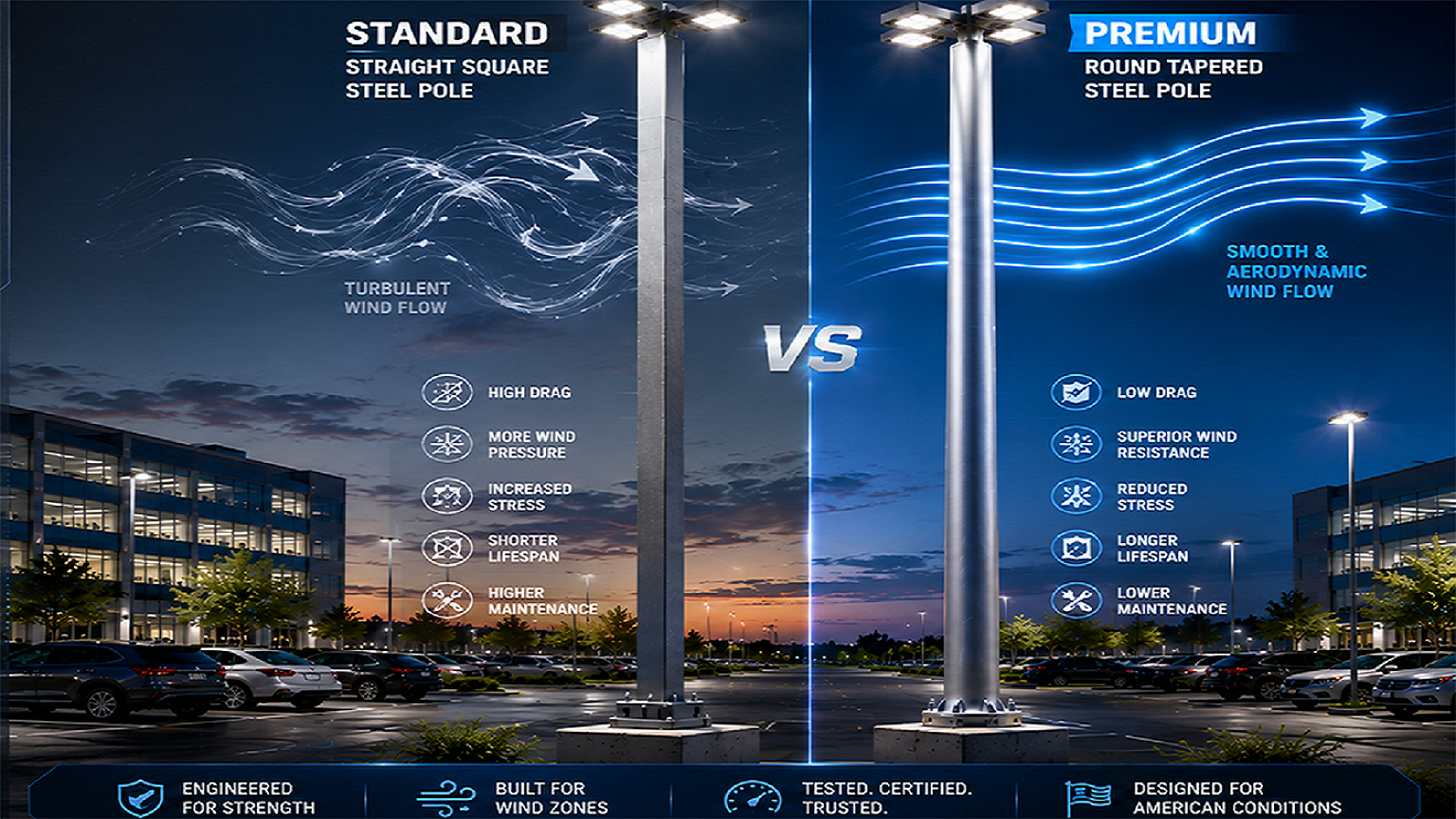
Straight vs. Tapered Light Poles: Which Offers Better Structural Integrity?
 June 9, 2026
 -
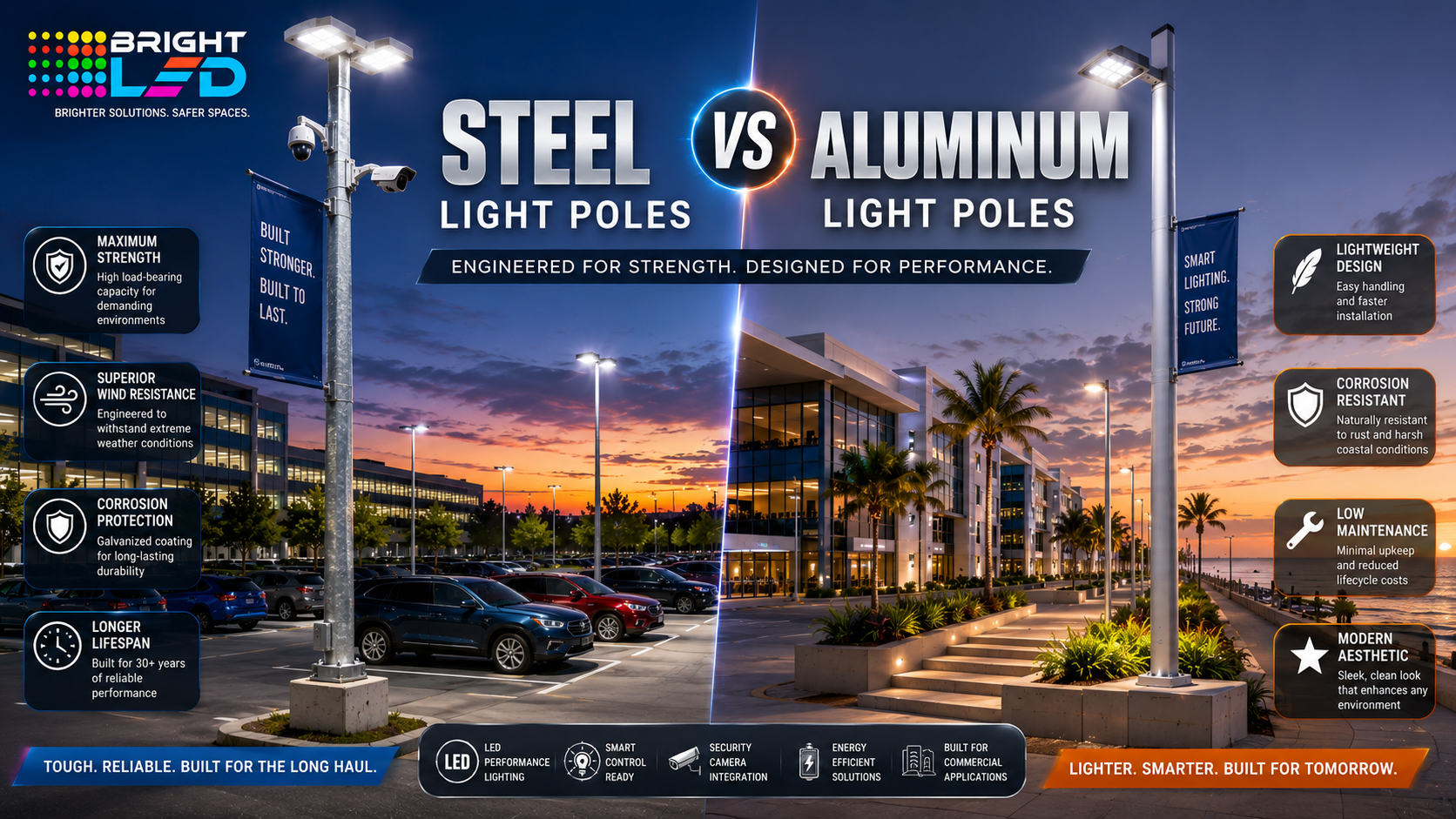
How to Choose the Right Commercial Light Pole: Steel vs. Aluminum
 June 5, 2026
 -
Best Practices for Specifying Round Steel Poles for Commercial Parking Lots
 June 2, 2026
 -
LED Emergency Exit Signs: Installation Guide for Commercial Buildings (2026)
 May 26, 2026
 -
LED Emergency Battery Backup Systems for Commercial Lighting & Businesses
 May 23, 2026